
Last updated August 25, 2026
Free on-site gate assessment - hinges, posts, and your LiftMaster or Nice gate operator checked before anything is quoted
The assessment is free and the quote is the invoice.
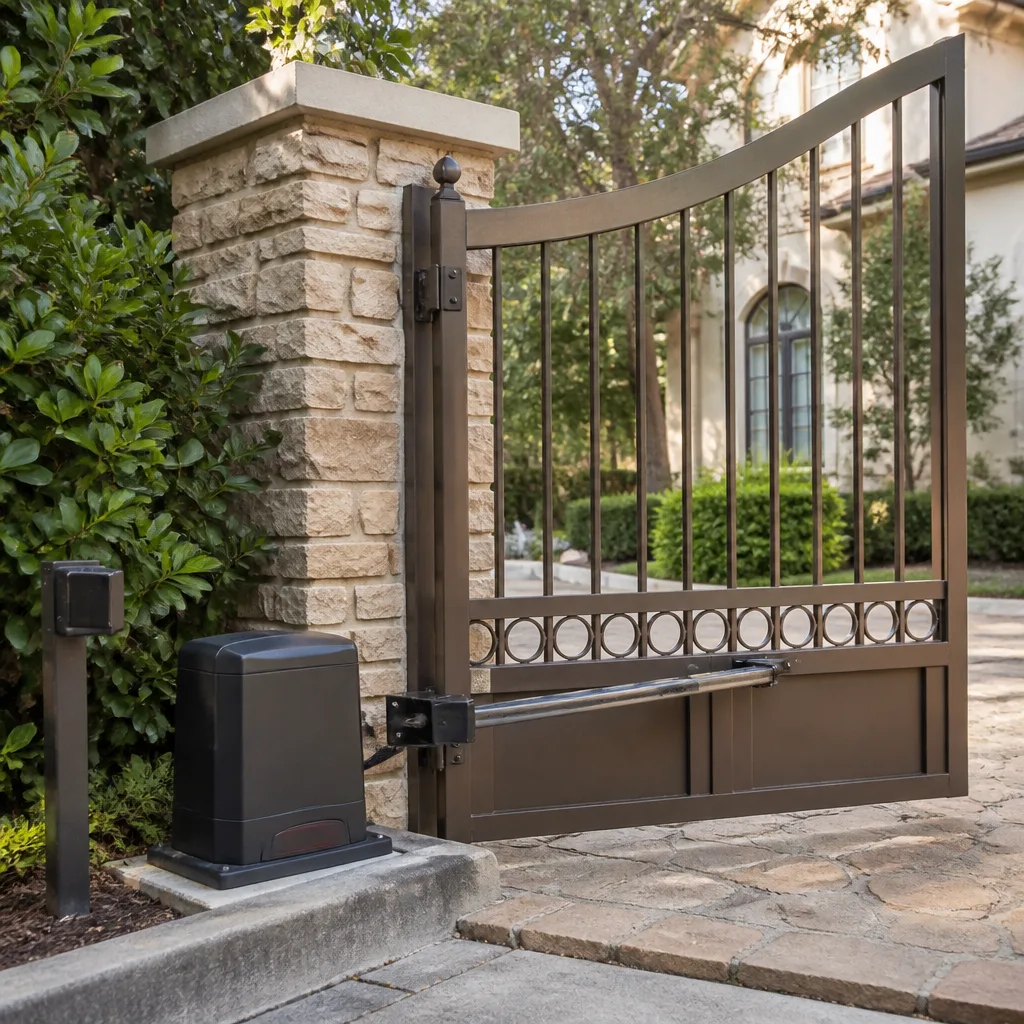
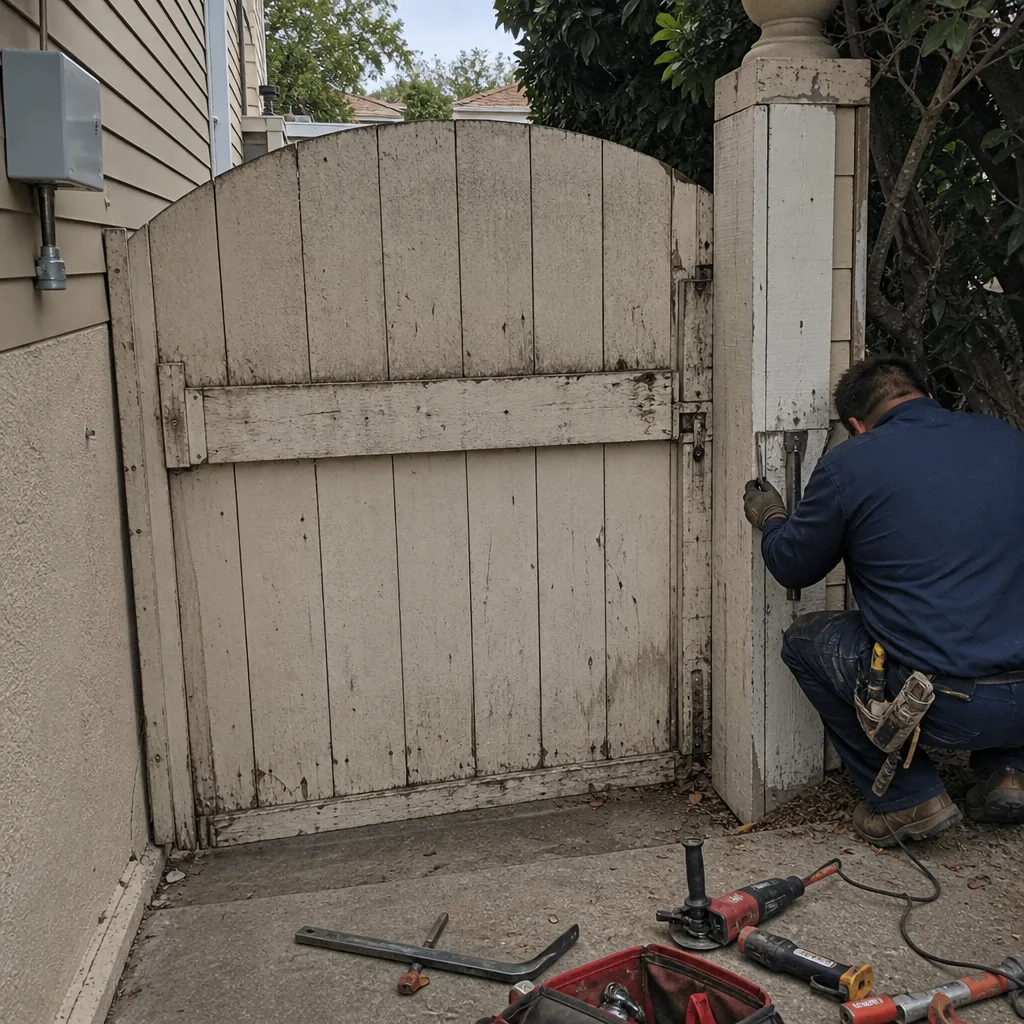 Before
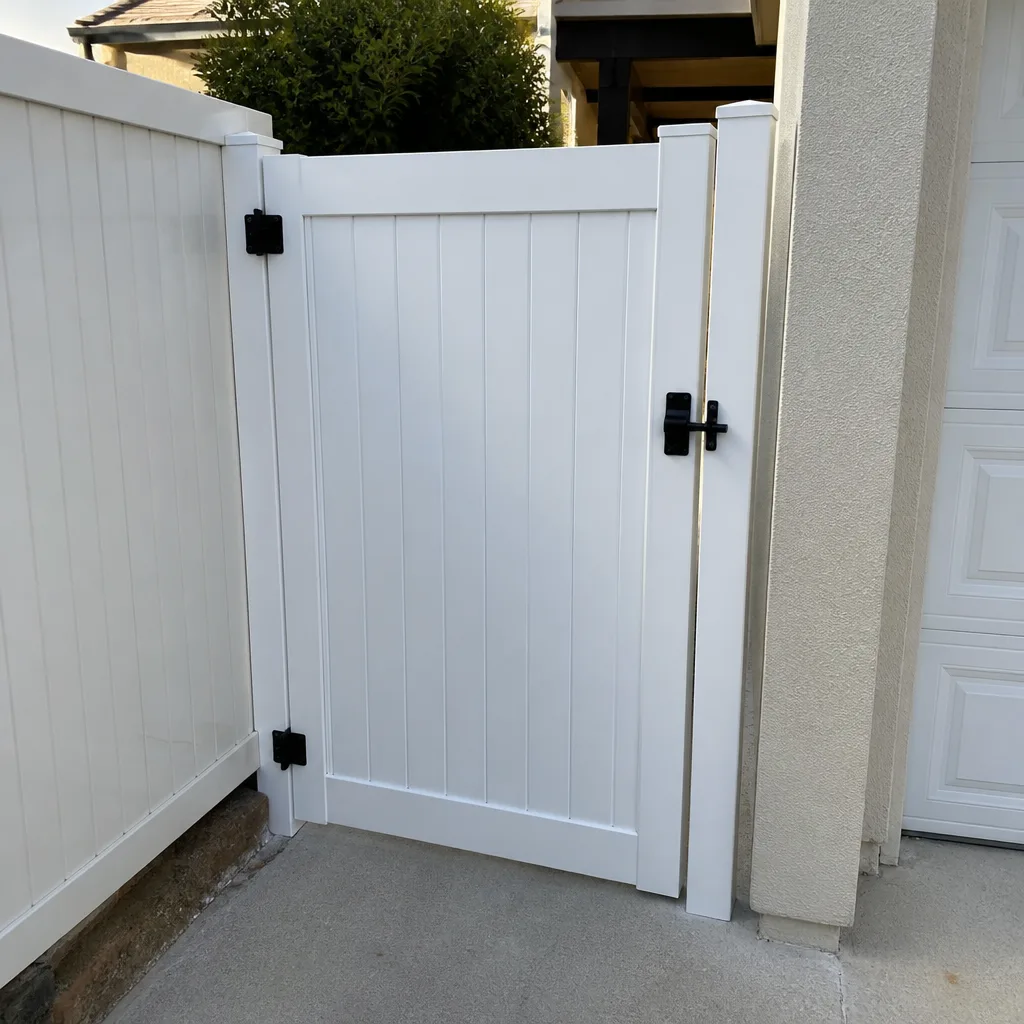 After
After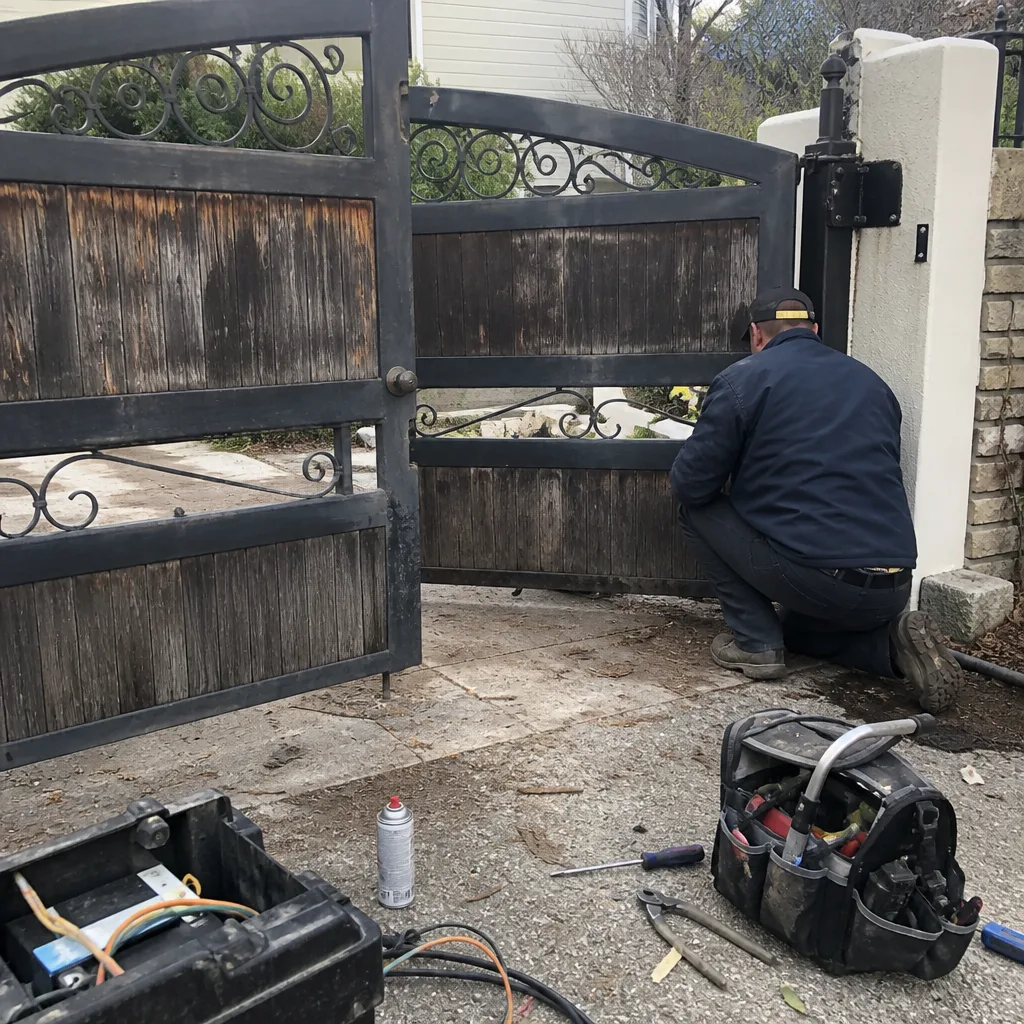 Before
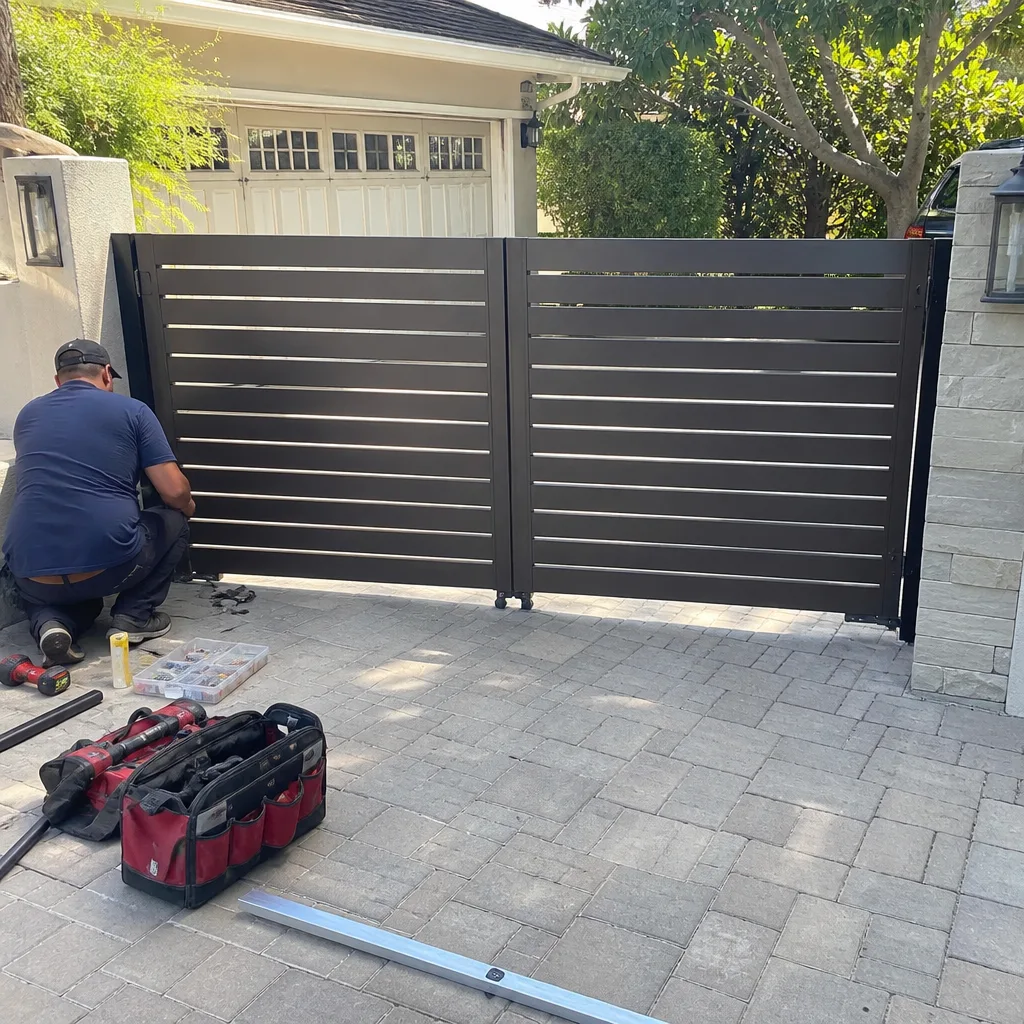 After
After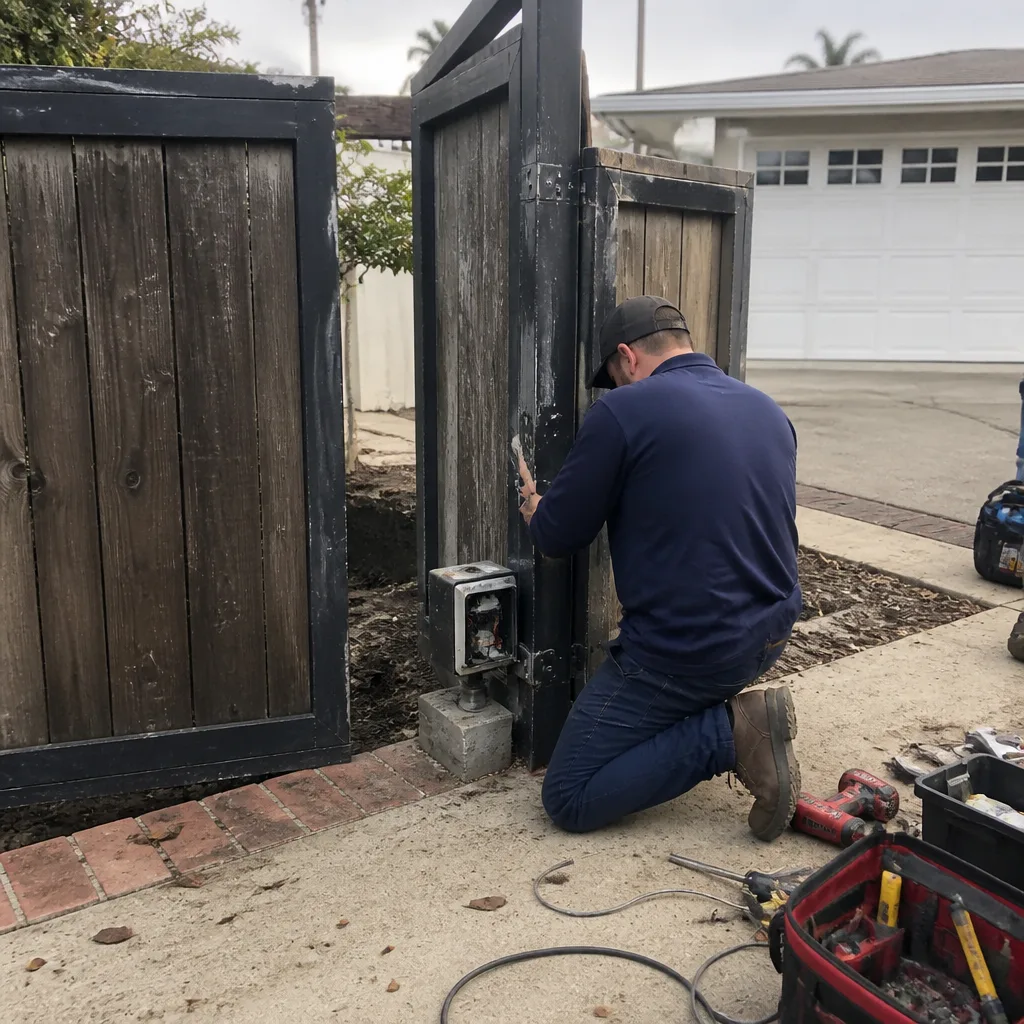 Before
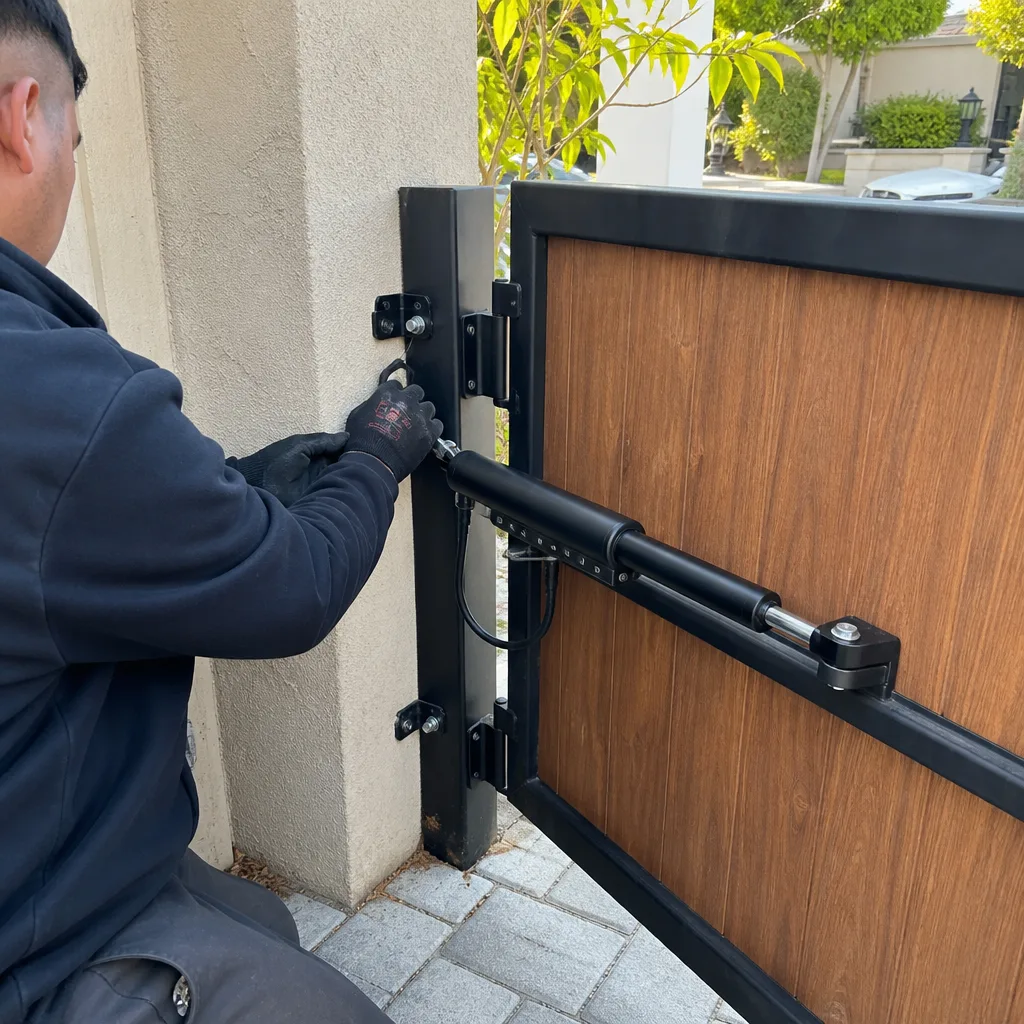 After
AfterThe Complete Guide to Gate Repair in Newport Beach
Most gate failures in Newport Beach are not caused by what people think. It is rarely a broken motor or a snapped hinge. More often, it is a gate that has drifted slightly out of square over years of coastal air, salt exposure, and daily use, and then one day the opener strains against the misalignment and burns itself out. Homeowners replace the motor, the gate still drags, and six months later the new motor fails too. This guide explains how gates actually fail here in Newport Beach, what repairs cost, what you can safely check yourself, and when the only sensible move is a phone call to someone who does this work every day.
Quick Answer
Gate repair in Newport Beach typically runs between $180 and $650 for most repairs, with full automation replacement on a driveway gate ranging from $1,200 to $3,800 depending on the opener size and the gate’s weight and length. The most common repair we see is replacing worn hinges or realigning a sagging gate, not replacing the motor. Most repairs are completed in a single visit, and the price should be quoted and agreed to before any work begins.
Table of Contents
- How Gates Actually Fail in Newport Beach
- What Gate Repair Costs in Newport Beach
- What You Can Safely Check Before Calling
- Motor Problems vs. Structural Problems: How to Tell the Difference
- The Gate Repair Process: What a Proper Job Looks Like
- Newport Beach-Specific Gate Considerations
- Common Mistakes to Avoid
- When to Call a Professional
How Gates Actually Fail in Newport Beach
After 42 years of repairing gates, and more than a decade working on driveways from Corona del Mar to Lido Isle, we can tell you that gate failures follow a pattern. The gate itself is a heavy steel or iron object, often 300 to 800 pounds, hanging from two or three hinge points on a post set in concrete. The opener is bolted to the gate and to a pad or post nearby. The system works until the gate stops moving smoothly, and then the motor works harder, and then something gives.
The number one cause is hinge wear. Hinges on a Newport Beach gate take a beating from salt air. The coastal humidity accelerates rust on the bearing surfaces, and over ten or fifteen years a hinge that once moved with a finger’s pressure now takes real force. When hinges bind, the opener pushes against resistance every cycle. The motor runs hotter. The gears inside strip, or the control board overheats, or the chain stretches. But the hinge was the original problem.
The second most common failure is alignment drift. Concrete slabs in Newport Beach shift subtly with soil moisture changes, and the post that held a gate plumb in 1998 may be a quarter-inch out of plumb today. That quarter-inch changes the geometry enough that the gate’s weight is no longer carried cleanly through the hinges. A gate that was perfectly hung now fights itself on every open and close.
Third is electronic failure, and this is where the salt air matters again. Control boards, limit switches, and photo-eye sensors corrode faster in coastal Newport Beach than they would in, say, Irvine or Tustin. A motherboard that would last fifteen years inland can fail in eight near the water. The fix is straightforward for a technician trained on the specific opener brand, but it is not a handyman task.
What Gate Repair Costs in Newport Beach
We quote every job before any bolt is turned, and the quote is the price. No add-ons, no “we found something else while we were in there” surprises unless we call you first and you approve the change. Here are the price ranges we see across Newport Beach, from Balboa Island to Dover Shores.
| Repair Type | Typical Cost Range | Notes |
|---|---|---|
| Hinge replacement (single gate) | $180 - $450 | Includes parts, labor, and re-leveling |
| Hinge replacement (double gate) | $350 - $750 | Both leaves, new pins and bearings |
| Gate re-alignment / re-hang | $220 - $500 | Adjusting posts, shimming hinges |
| Opener motor replacement | $400 - $1,200 | Depends on brand and horsepower |
| Control board replacement | $250 - $650 | Brand-specific, often in stock |
| Photo-eye sensor replacement | $95 - $180 | Includes alignment and testing |
| Welding repair (cracked rail or gate frame) | $150 - $600 | Depends on crack length and location |
| Full automation system (opener + arms + sensors) | $1,200 - $3,800 | Gate size and weight drive cost |
These are honest ranges for Newport Beach specifically. A 16-foot steel driveway gate with a Viking opener costs more to repair than a 6-foot pedestrian gate with a Mighty Mule. The age of the wiring matters too: older homes in neighborhoods like Lido Isle and Balboa Peninsula sometimes have underground wiring that was installed before modern code, and diagnosing that adds labor time even when the fix itself is small.
Every Ironworks Gate Co. job includes the written 90-Day Done Right Promise. If it is not right, we come back and make it right. No paperwork, no argument. That applies whether the job was a $95 sensor replacement or a full automation system.
Call (760) 852-5601 for an exact quote on your gate. Estimates are free, and the price we quote is the price you pay.
What You Can Safely Check Before Calling
Some things on a gate are safe to look at yourself. Some are not. Gate springs, particularly torsion springs on cantilever gates, are under enormous tension and can cause serious injury if mishandled. Never attempt to adjust or remove a gate spring yourself. What you can safely do is observe and take notes, which helps any technician diagnose faster when they arrive.
Here is a safe inspection checklist:
- Watch the gate cycle twice. Stand back and open and close it fully. Does it hesitate? Does it shudder? Does one leaf of a double gate lag behind the other? Note exactly where in the travel the problem happens.
- Look at the hinges. Do you see rust dust or metal shavings below any hinge? Can you see a gap that is wider at the top than the bottom? These are signs of hinge wear.
- Check the gate’s resting position. When closed, is the gap between the two leaves even top to bottom? If the top gap is wider than the bottom, the gate has sagged.
- Listen to the motor. A healthy opener has a steady hum. A grinding sound means gears are stripping. A clicking sound without movement means the capacitor or the limit switch is likely the problem.
- Test the photo-eye sensors. These are the small devices near the bottom of the gate posts on either side. Wave your hand in front of one while the gate is opening. If the gate does not reverse or stop, the sensors need attention.
Write down what you observe. Tell the technician on the phone. It genuinely shortens the repair visit.
Motor Problems vs. Structural Problems: How to Tell the Difference
This is the most important distinction in gate repair, and it is the one homeowners in Newport Beach most often get wrong, usually because the repair person they called before did not make the distinction either.
A structural problem is any problem with the gate itself, the hinges, the posts, or the physical alignment. A motor problem is any problem with the opener, the control board, the wiring, or the sensors. They produce similar symptoms: the gate moves slowly, or stops halfway, or makes a grinding sound. The difference matters because replacing a $600 motor when the real problem is a sagging gate means you will replace the motor again in twelve months.
Here is how to tell them apart:
- The gate is hard to move by hand. Disengage the opener (most have a release handle or key). Push the gate manually. If it is difficult to move, the problem is structural. A healthy gate should swing or slide with modest effort. If it moves easily by hand but struggles under motor power, the problem is the motor or its electrical supply.
- The gate scrapes the ground or the post. This is structural. A gate that has sagged will scrape at one point in its travel. You will see a wear mark on the concrete or the gate itself.
- The motor runs but the gate does not move. This can be either. If the motor hums and nothing happens, the chain or belt may be broken (motor side), or the gate may be jammed against something (structural side). Disengage the opener and try moving the gate by hand to isolate it.
- The gate opens but will not close, or closes but will not open. This is almost always a motor or sensor issue. Limit switches tell the opener when to stop. If one is set wrong or has failed, the opener thinks the gate is already where it should be.
In our experience across Newport Beach, about 40 percent of “motor failure” calls turn out to be structural problems with the gate that were never addressed. That is why we always check the gate’s physical movement before touching the electronics, regardless of what the homeowner reported.
The Gate Repair Process: What a Proper Job Looks Like
If you have never had a gate repaired properly, you may not know what to expect. Here is what a correct repair looks like when it is done right, the way Ironworks Gate Co. has done it since 1984.
- Diagnosis first, always. The technician arrives, walks the gate through its cycles, checks the hinges, tests the opener’s force settings, and identifies the root cause. This takes 20 to 45 minutes on most Newport Beach properties.
- Written quote before work begins. You get a number. You approve it. That is the contract. No work starts until you say yes.
- The repair itself. Most repairs take one to three hours. We carry parts for all nine brands we service, including FAAC, BFT, Linear, and Viking, so the correct part is usually in the truck, not “on order.”
- Testing and adjustment. After the fix, the gate is cycled at least a dozen times. Force settings are checked so the opener never pushes harder than it needs to. Photo-eyes are tested. The gate is checked for smooth travel by hand and under power.
- You watch it work. We want you standing there when the gate runs its final test. You see it done. You ask questions. You are satisfied before we leave.
- The 90-Day Done Right Promise is explained. You get it in writing, on the invoice, every time. The Keystone Standard applies whether the job was large or small.
The point of all this is simple: a gate that is fixed properly should not need attention again for years. A gate that is patched quickly will be broken again before the season changes. Newport Beach homeowners who have lived here twenty years know the difference between a patch and a repair. We do too.
Newport Beach-Specific Gate Considerations
Newport Beach is not like other Southern California cities, and its gates are not either. The marine layer, the salt, the soil, and the style of the homes all shape how gates wear and what they need.
Salt air is the constant. Homes within a mile or two of the ocean, from the Balboa Peninsula up through West Newport, see noticeably faster corrosion on exposed steel and on electronic components. A galvanized hinge lasts twenty years on a gate in Costa Mesa and twelve on a gate in Newport Beach. That is not a guess; it is a pattern we have watched for decades. The right repair accounts for it, using marine-grade stainless hardware when appropriate and sealing exposed electronic connections against moisture.
Soil movement matters too. Newport Beach has areas of expansive soil that shift with winter rain and summer drought. Concrete gate posts set on shifting soil go out of plumb over time. This is common on the hillside properties in Newport Coast and in older sections of the city where posts were set forty or fifty years ago. A gate that was hung plumb in 1998 is rarely plumb today.
Neighborhood style matters. Lido Isle and the Port Streets have many custom iron gates that were fabricated to match the architecture, often with scrollwork or custom rails. Repairing those gates is not just about function; the repair has to look right. A welded patch that holds but is ugly is not a complete repair. Our welding work is done with the understanding that the gate is part of the home’s face to the street.
Code compliance matters as well. Newport Beach enforces the California building codes governing gate safety, including entrapment protection requirements for automatic gates. Photo-eye sensors, reversing mechanisms, and proper force settings are not optional accessories; they are legal requirements. A gate that does not reverse when something blocks it is a safety hazard and a liability. Every Ironworks Gate Co. repair meets current code, full stop.
Common Mistakes to Avoid
- Replacing the motor without checking the gate. If the gate is sagging or the hinges are worn, the new motor will fail the same way the old one did. Fix the gate first, then the motor. Skipping this step is the single most expensive mistake we see in Newport Beach.
- Lubricating without cleaning. Spraying lubricant over rust and dirt creates a grinding paste that accelerates hinge wear. A hinge should be cleaned before it is lubricated, or not lubricated at all.
- Ignoring a slow gate. A gate that moves more slowly than it used to is telling you something. Waiting until it stops completely often turns a $200 hinge repair into a $900 motor replacement.
- Buying parts online without knowing the model. Control boards, arms, and sensors are brand-specific. A FAAC board does not work in a BFT opener. Ordering the wrong part wastes time and money, and installing it can damage the opener.
- Hiring a handyman for automation work. Gates involve low-voltage wiring, force settings, photo-eye alignment, and brand-specific programming. A general handyman who “can probably figure it out” rarely can, and the result is often a gate that works for a month and then fails, or worse, a gate that does not reverse when a child or pet is in the path.
- Forgetting the warranty. If your opener is under manufacturer warranty, a repair by someone who is not trained on that brand can void it. Confirm the repair company is certified on your opener’s brand before you book.
- Accepting a verbal quote. If the price is not written down before work begins, the final bill is an open question. A written quote protects you. At Ironworks Gate Co. it is standard practice on every job in Newport Beach, and the quote is the price.
When to Call a Professional
A professional should handle any repair that involves the gate springs, the opener’s internal mechanisms, the control board, or the wiring. Gate springs are dangerous, and the quickest way to a serious injury is trying to adjust one without the proper tools and training. If your gate has stopped working entirely, if it moves erratically, if it makes grinding sounds, or if it does not reverse when something blocks its path, stop using it and call someone who does this work every day. The same applies to any welding on a gate frame or repair to a post that has shifted. Ironworks Gate Co. offers free estimates in Newport Beach, with background-checked, uniformed technicians on every job and a live person answering the phone 24 hours a day. Call (760) 852-5601.
Frequently Asked Questions
Most gate repairs in Newport Beach run between $180 and $650. Hinge replacement typically stays near the low end, while motor replacement and control board work push toward the upper end. The price is quoted in writing before any work begins, and it does not change unless you approve a change. Call (760) 852-5601 for a free estimate on your gate.
In most cases, yes. We carry parts for all nine brands we service, including FAAC, BFT, Linear, and Viking, and most Newport Beach repairs are completed in a single visit. A live person answers the phone 24 hours a day, 7 days a week, so you will never leave a voicemail and wait for a callback. Call (760) 852-5601 and tell us what your gate is doing.
A sagging gate can almost always be saved. The fix is new hinges or re-hanging the gate to restore proper alignment, and it costs a fraction of what a new gate costs. We have straightened and re-hung gates in Newport Beach that were installed in the 1980s, and they close like the day they were hung. If you are unsure, call (760) 852-5601 and we will come look at it and give you an honest answer.
Yes. A complete gate repair or replacement in Newport Beach includes the low-voltage power run, the photo-eye sensors, the force settings, and the entrapment protection required by California code. Everything is tested before we leave, and the whole job is protected by the written 90-Day Done Right Promise.
It covers everything on the job. If the gate is not right within 90 days, we come back and make it right. No paperwork to file, no argument to have, no exceptions. We have worked this way since 1984, and it applies to every Newport Beach job, from a $95 sensor to a full automation system.
Yes. Ironworks Gate Co. technicians are trained and equipped on nine gate-automation brands: LiftMaster, FAAC, BFT, Linear, Viking, Ghost Controls, DoorKing, Elite, and Mighty Mule. Whatever opener is on your Newport Beach driveway, the correct fix is made on the first visit, not the third. Call (760) 852-5601 and confirm your brand on the phone if you would like.
The Bottom Line
Gates fail for predictable reasons, and in Newport Beach those reasons are shaped by salt air, shifting soil, and the simple physics of a heavy steel object hanging on hinges for decades. The repair that lasts is the one that fixes the root cause, not the symptom. It is quoted in writing, done in a single visit by a technician trained on your specific opener brand, and backed by a written guarantee. Ironworks Gate Co. has been doing it that way for over 42 years. If your gate in Newport Beach needs attention, call (760) 852-5601 for a free estimate. A live person will answer, and the price you hear is the price you will pay.
Written by Victor Salinas, Owner at Ironworks Gate Co., serving Newport Beach since 2013.