
Last updated August 25, 2026
Free on-site gate assessment - hinges, posts, and your LiftMaster or Nice gate operator checked before anything is quoted
The assessment is free and the quote is the invoice.

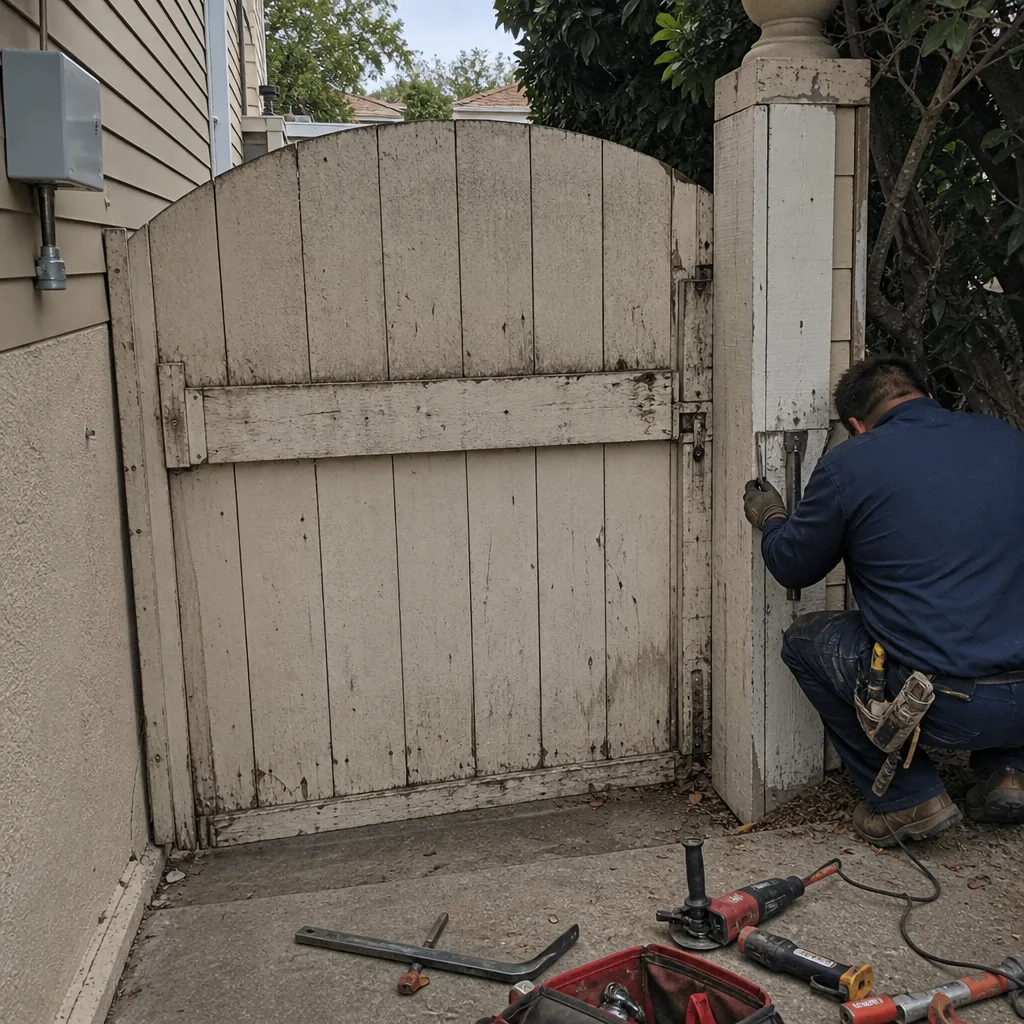 Before
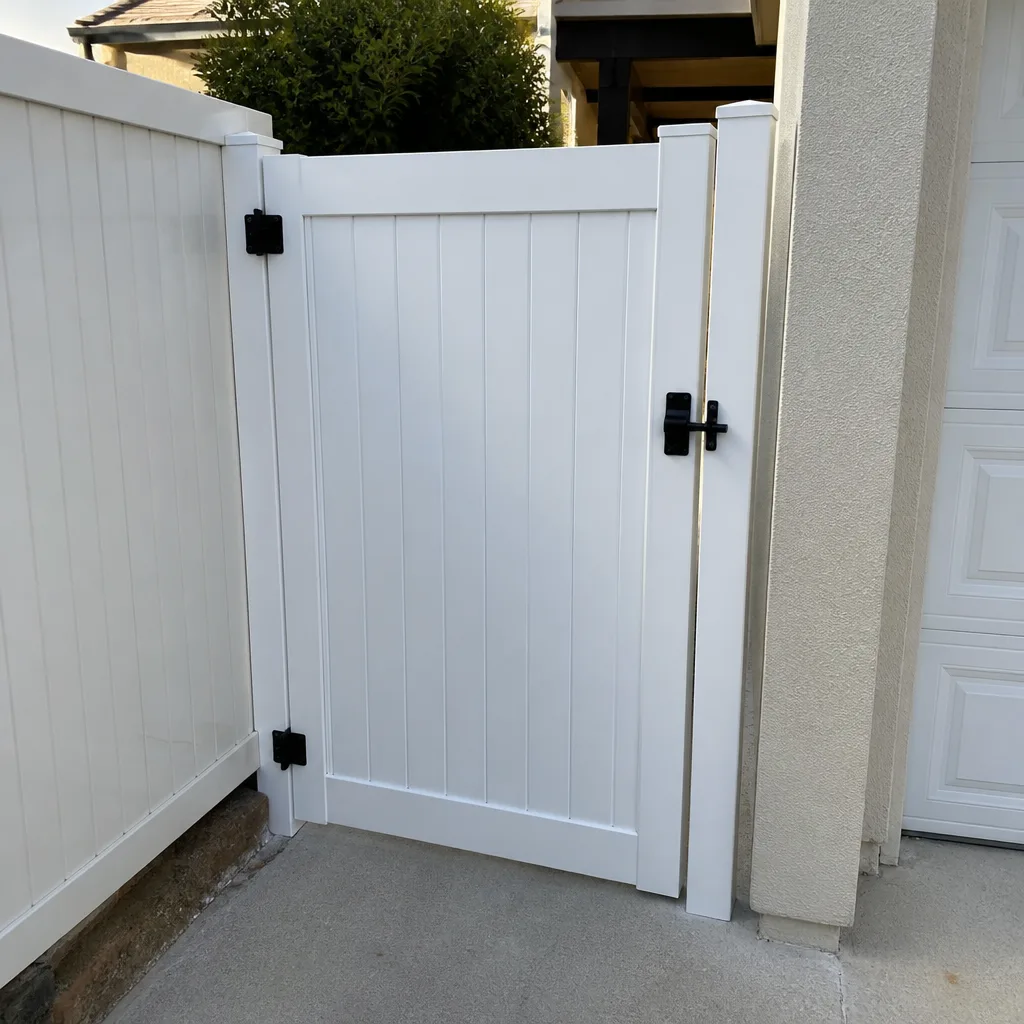 After
After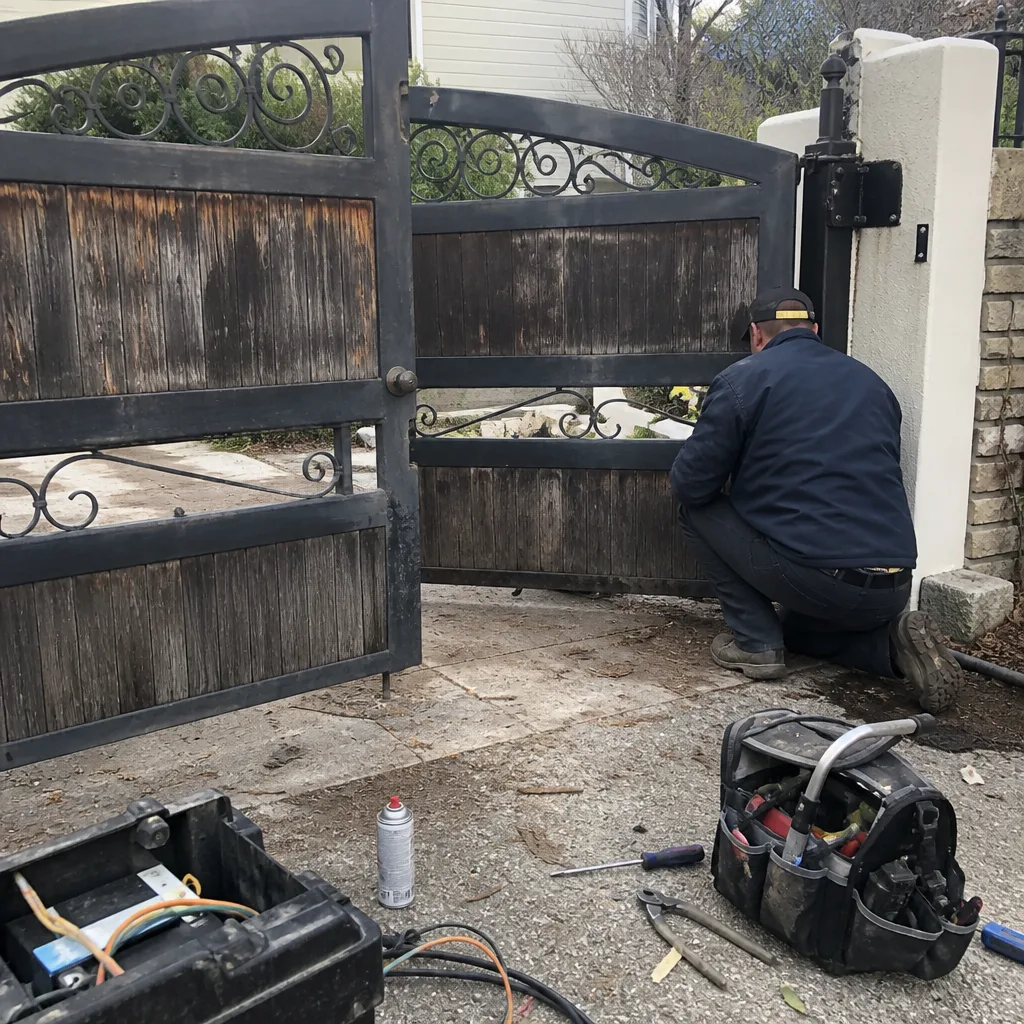 Before
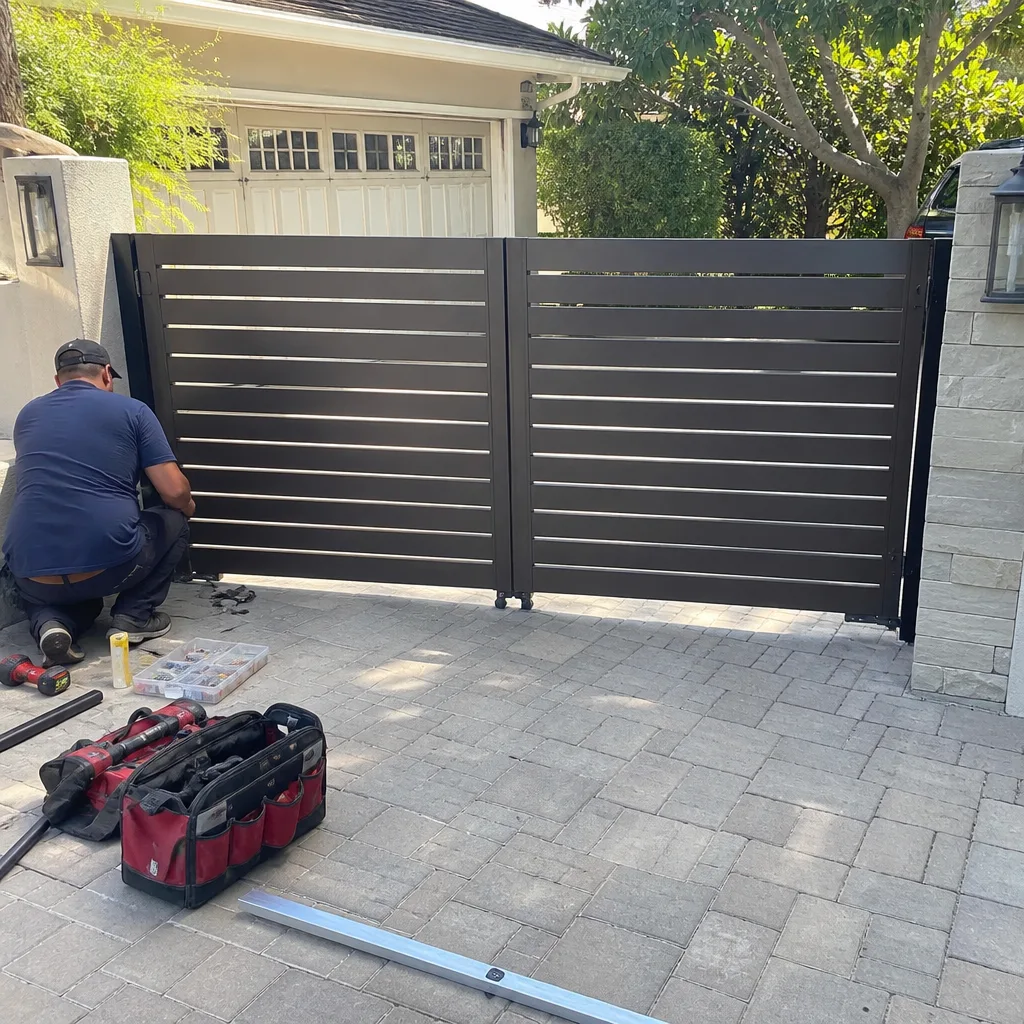 After
After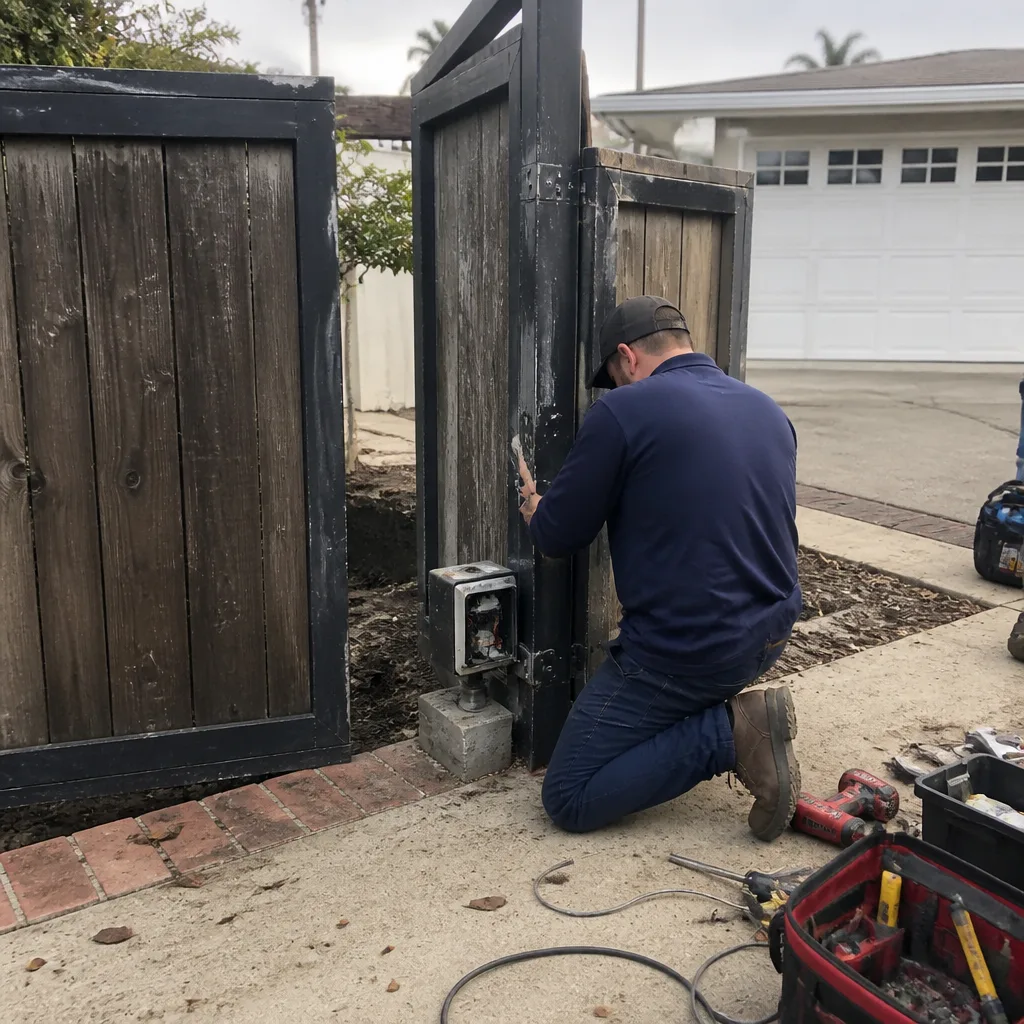 Before
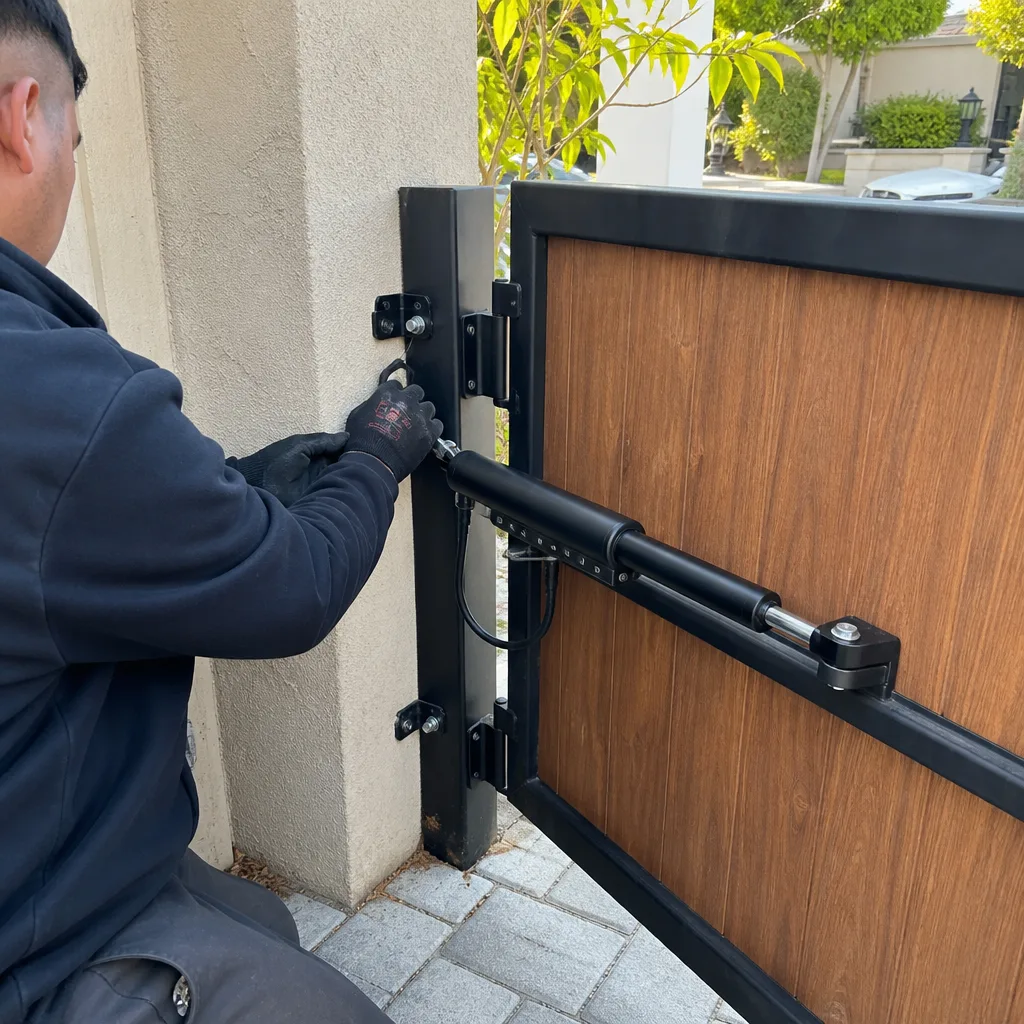 After
AfterGate Repair Maintenance Checklist for Newport Beach Homeowners
A gate that won’t open isn’t the worst thing that can happen. A gate that won’t close is. We’ve spent over four decades watching Newport Beach homeowners learn that lesson the hard way, usually at 6 a.m. on a Monday with a car stuck inside the driveway. Here’s the counterintuitive part: the expensive failures almost never come from a sudden blowout. They come from a season of small, quiet neglect that the salt air in Newport Beach accelerates dramatically. Moisture off Lido Isle and the Back Bay, combined with coastal fog and the hard UV exposure on hillsides from Corona del Mar to Westcliff, takes years off gate hardware compared to inland Orange County. This guide will show you what to check, when to check it, and what you can safely handle yourself versus what belongs in the hands of a gate specialist.
Quick Answer
A proactive maintenance routine for a Newport Beach gate should include: monthly visual inspections of hinges, welds, and the opener chassis; quarterly lubrication of bearings and chain drive systems; and an annual professional tune-up that covers limit switches, force settings, and safety sensor alignment. In Newport Beach specifically, you’ll want to add a monthly wipe-down of exposed metal with freshwater because the marine layer leaves a salt residue that accelerates corrosion, and an annual inspection of any steel gate set within one mile of the coastline.
Table of Contents
- Why Newport Beach Coastal Conditions Demand More Maintenance Than Inland Orange County
- The Monthly Gate Maintenance Checklist: 10 Minutes That Save You a Service Call
- Seasonal Gate Maintenance: What We Advise Every Three Months
- The Annual Gate Inspection: The Non-Negotiable Foundations
- Automation and Opener Care: Nine Brands, One Rule
- Common Mistakes to Avoid
- When to Call a Professional
- Frequently Asked Questions
- The Bottom Line
Why Newport Beach Coastal Conditions Demand More Maintenance Than Inland Orange County
Newport Beach is not a normal environment for a steel or iron gate. It is a marine environment. The same atmospheric moisture that fogs luxury car windows in Harbor View and corrodes light fixtures along Balboa Peninsula is working its way into your gate hinges, weld points, and opener housing every single day. We know this because we’re the Ironworks Gate Co. home team. We’ve replaced hundreds of Newport Beach gate hinges that looked fine from the outside and were nearly rusted through from the inside. The failure pattern is predictable: untreated steel in a salt-laced fog begins spalling within three to five years, hardware that would last fifteen to twenty years in Tustin or Irvine fails in eight to ten years closer to the water.
The specific culprits in this city are:
- Marine layer residue: Every evening and early morning, fog rolls across the coast and deposits a micro-layer of salt on any exposed surface. It dries, leaving concentrated sodium chloride in cracks and joints. Over time, it pries apart metal grain and accelerates oxidation.
- UV exposure on south-facing gates: Gates that face the sun all afternoon, common in Newport Coast and Pelican Hill, see powder coating fade and rubber seals harden and crack. UV-stressed plastic gears inside opener arms become brittle faster than in inland climates.
- Proximity to irrigated landscaping: Most Newport Beach homes in areas like Dover Shores and Bayshores have drip systems near the gate posts. Runoff water, especially water treated with fertilizer, accelerates corrosion of the post anchors and the bottom rail of the gate itself.
- Wind-driven sand: Properties near Newport Dunes and the peninsula beaches get airborne sand. Sand acts as an abrasive on moving parts, wearing down bearing surfaces and embedding grit in lubricant, turning it into a lapping paste.
Our advice for any Newport Beach homeowner with a steel driveway gate: treat the gate the way you would treat a vehicle that lives in the driveway. You wouldn’t skip a year of maintenance on a car and expect it to run well in this environment. Your gate deserves the same respect.
The Monthly Gate Maintenance Checklist: 10 Minutes That Save You a Service Call
Here is the core maintenance sequence we recommend to our Newport Beach customers. It takes about ten minutes. You do not need tools beyond a garden hose, a dry rag, and a can of appropriate spray lubricant. We’ll be specific about what to use and what to avoid, because using the wrong product on a gate is sometimes worse than doing nothing at all.
- Visual sweep while the gate moves. Stand where you can see the hinge side and the latch side. Run a full open and close cycle. Watch for any jerking, hesitation, or shaking. In our experience, a gate that shudders in the middle of its travel arc is usually a sign of a worn wheel or a dragging bottom rail, not a motor problem.
- Wipe down exposed metal with freshwater. Do not use tap water and then walk away. Rinse with a spray of freshwater, then dry. Focus on hinge pins, weld joints, latch plates, and the bottom rail. This single step does more to extend the life of a Newport Beach gate than any other homeowner action. It removes the salt crust before it gets a chance to bite.
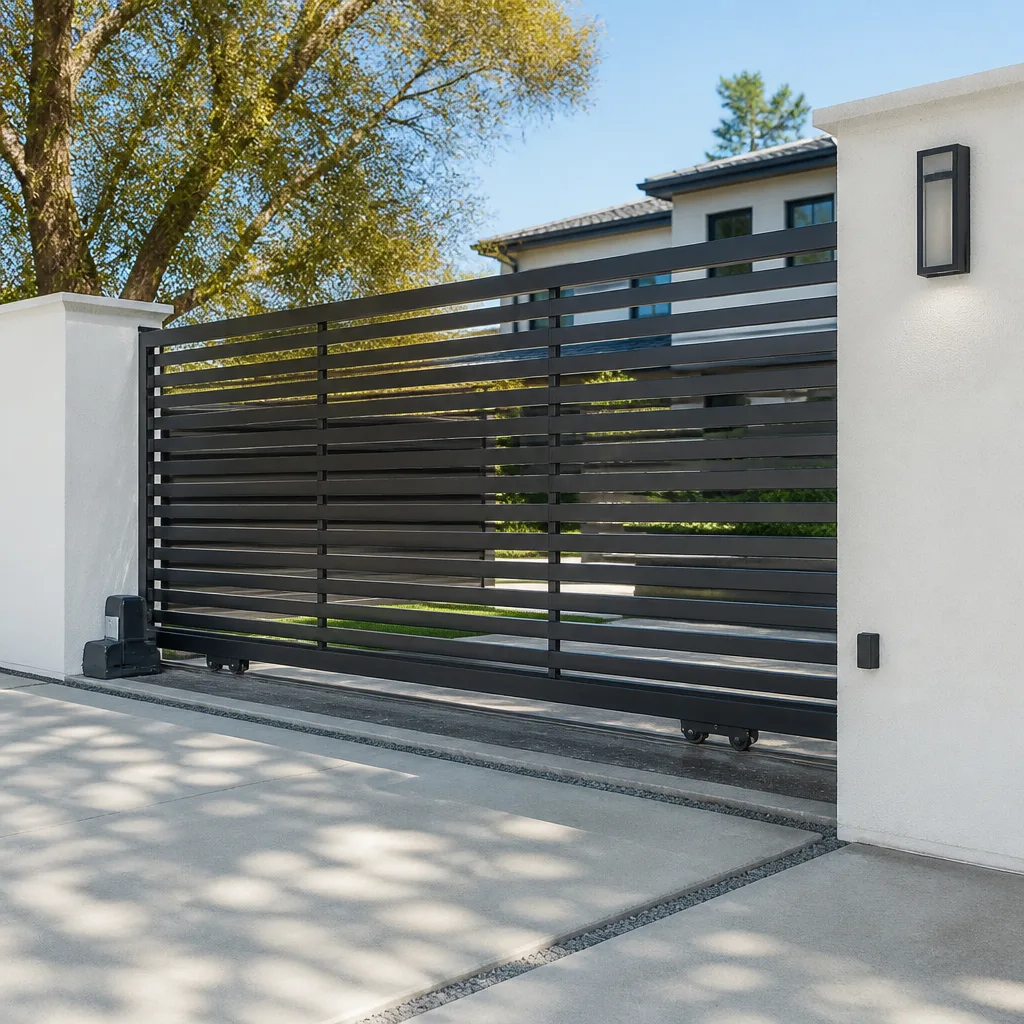
- Check the gate’s balance. With a sliding gate, there is no balance check. But with a swing gate, manually release the operator (if you know how and it is safe to do so) and give the gate a gentle push. A properly hung and weighted swing gate should move with steady resistance and hold its position without drifting or wanting to slam. If it drifts closed or open on its own, the hinges are worn or the gate was never hung square when installed.
- Listen to the motor. A healthy opener motor hums at a steady, low tone. A motor that whines, grinds, or labors is working too hard against some kind of resistance. In Newport Beach, that resistance is often salt-corroded slide wheels or a chain that is rusted stiff. Ignoring the sound does not make the problem go away; it just guarantees the failure will be more expensive later.
- Inspect the safety edges and photo eyes. Coatings of dried salt fog and dust can block the infrared beam on a photo eye. A quick wipe of the sensor lens with a dry, soft cloth keeps the gate from falsely reversing. Safety edges on a swing gate should be checked for cracking. Any cut in the outer rubber shell means moisture can enter and compromise the internal sensor strip.
If you follow this monthly list, you’ll catch most problems before they become service calls. The key is regular, hands-on attention. A gate is a machine. Machines need eyes on them.
Seasonal Gate Maintenance: What We Advise Every Three Months
Quarterly maintenance picks up where the monthly list leaves off. These are the slightly more involved tasks that keep the mechanical and electrical systems of your Newport Beach gate from degrading. None of these should require a service visit if your gate is in decent shape. But if you find something amiss, do not force the issue. A gate under tension or load is not the place for a novice repair.
Lubricate the Moving Parts
Use a dry lubricant with a carrier that evaporates. A silicone or PTFE-based spray works well on hinge pins, slide wheels, and chain drives. Do not use WD-40 as a permanent lubricant. It is a water displacer and light solvent, not a durable lubricant. It actually strips away existing grease compound and leaves bare metal more exposed. In the Newport Beach environment, that is a fast track to rust.
For chain-driven slide gates, apply a light, even coat of lubricant to the entire chain while the gate is in motion, if you can safely reach it. For hinge pins, spray the top and bottom of each pin, then run the gate through a cycle to work the lubricant into the bearing surface. Wipe excess. Excess lubricant collects dust and sand and becomes a grinding paste.
Check the Gate Hardware for Movement
Every quarter, press firmly against the gate near each hinge. A gate should not rock. If it does, the hinge bolts are loosening, the post has shifted, or the hinge pin itself is wallowed out. All three conditions are common in Newport Beach because the ground here is not always stable. Coastal bluff properties, especially in areas like the Newport Coast hillsides, see seasonal soil movement from irrigation and heavy winter rain. That movement can throw a gate out of square enough to strain the motor and shorten its life by years.
Test the Manual Release
The manual release on your opener is the lever or key you pull when the power goes out and you need to open the gate by hand. Test it once a quarter. If the release is rusted or seized and you only discover this during a power outage, you have a real problem. In Newport Beach, power interruptions are a fact of life, whether from wind events along the coast or rolling blackouts during heat waves. A homeowner should be able to move their gate manually in under a minute.
The Annual Gate Inspection: The Non-Negotiable Foundations
Once a year, the gate needs a thorough inspection. We believe this is the single most important maintenance habit a Newport Beach homeowner can adopt. It doesn’t have to be us. It should be someone who knows gates, knows automation, and knows what coastal corrosion looks like before it becomes a structural failure.
The annual inspection should cover:
- Weld integrity on every joint. The welds that hold your gate frame together and attach the hinges to the post are under constant cyclical stress. Coastal moisture causes rust to start inside micro-cracks in welds long before it appears on the surface. By the time you see a brown stain bleeding through the powder coat, the structural damage is already underway.
- Hinge pin and bearing wear. Operating a gate on worn bearings is like driving a car on a bad wheel bearing. It works right up until it doesn’t. A hinge failure on a heavy gate can cause the gate to sag, drag, and eventually bind the motor. In Newport Beach, where many estate gates weigh four hundred pounds or more, hinge wear is a gradual but serious problem.
- Opener force settings and limit switches. Garage gate openers are set at the factory to specific force curves. Over time, as the gate’s weight distribution changes due to rust or wear, the motor may need to apply more force than it was designed to generate. The result is shortened motor life and a gate that poses a safety risk if the force settings drift too high.
- Safety sensor alignment. Every automatic gate in California is required to have a primary and secondary entrapment prevention system. That means photo eyes, safety edges, or both. Misaligned sensors create false reversals that wear down the motor’s gear train and frustrate every driver trying to enter the driveway.
We charge $89 for a seasonal tune-up, and a surprising number of our Newport Beach customers book it annually in the fall, before the winter rain starts pushing moisture into every cranny of their gate hardware. That is not a sales pitch. It is just good timing.
Automation and Opener Care: Nine Brands, One Rule
The opener is the brain of your automatic gate, and it is almost never the first thing to fail. In the overwhelming majority of service calls we make in Newport Beach, the problem starts in a bearing, a hinge, a wire connection, or a mechanical bind, and the opener is just the messenger. That said, opener maintenance itself is not complicated. The rule is simple: keep the opener dry, clean, and configured within its designed load range.
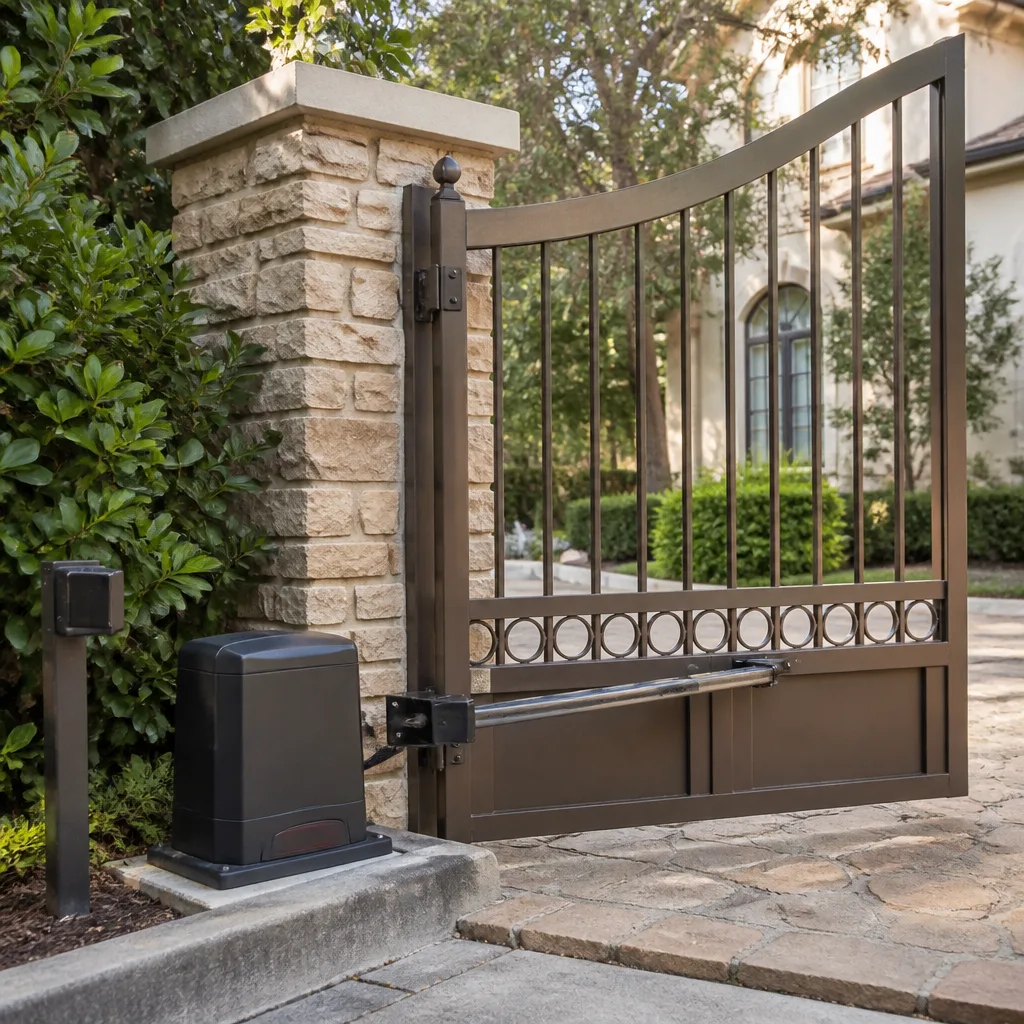
We are trained and equipped to work on nine major gate automation brands, including FAAC, BFT, Linear, and Viking, plus LiftMaster, Ghost Controls, DoorKing, Elite, and Mighty Mule. That matters in Newport Beach, where the mix of gate equipment is as varied as the architecture. Oceanfront estates with old FAAC hydraulic operators sit a few streets away from newer Corona del Mar houses with Linear swing arms. Knowing all of them means the correct fix happens on the first visit. We never have to guess, and we never have to rig something just to make it work for a few months.
For the homeowner, opener care means:
- Keep the control box sealed. The circuit board inside an opener control box does not tolerate salt fog or moisture. If the gasket on your control box is cracked or missing, moisture is getting in. In Newport Beach, a control box with a bad seal is a control box with a limited future.
- Watch the breaker and the power supply. Openers are sensitive to voltage drop. If your gate hesitates or runs slower on hot afternoons, it may not be a motor problem. It may be an undersized wire run or a corroded connection at the breaker. Those are electrical issues, and they should be addressed by a professional before they cause expensive damage.
- Respect the duty cycle. Every opener is rated for a certain number of operational cycles per hour. A residential gate opener is not a commercial one. If you run the gate twenty times a day because contractors and deliveries are coming and going, you may be exceeding its designed duty cycle. In Newport Beach, with our many gated communities and frequent construction activity, this is more common than most people realize.
Common Mistakes to Avoid
- Skipping the freshwater rinse. The single most common and most damaging mistake in Newport Beach is never rinsing the gate. Homeowners assume rain will wash the salt off. Rain does not remove salt; it dissolves it and drives it deeper into the metal. A monthly rinse with freshwater is the cheapest insurance policy available.
- Lubricating with the wrong product. WD-40 and heavy grease are not appropriate for most gate applications. Heavy grease traps sand and salt, creating an abrasive slurry that wears the hinge pins faster than no lubricant at all. Dry silicone or PTFE spray is the right choice for coastal environments.
- Power washing the gate and opener. Many Newport Beach homeowners have a pressure washer for their stone and stucco. Do not point it at the gate opener, control panel, or any electrical component. High-pressure water forces moisture past seals and into the electronics. Hand wash, rinse, and dry instead.
- Ignoring the warning sounds. A gate that begins to make a new sound, whether it is a grind, a squeal, or a galloping vibration, is sending a signal. Continuing to operate the gate while it is making that sound compounds the damage every single cycle. The repair gets more expensive the longer the sound is ignored.
- Deferring hinge replacement. Hinges wear out. It is not a moral failing of the gate or the installer. In a salt environment, hinge pins are consumable parts. Replacing them at the first sign of play is a routine repair. Letting them go until the gate sags is a structural repair.
When to Call a Professional
Some things are safe to handle yourself. The monthly rinse, the visual inspection, the listening test, the sensor wipe. Those are homeowner tasks. But there are specific situations where the right move is to pick up the phone and get someone who works on gates every day.
Call a professional if your gate is making a grinding noise, if it has visibly sagged or started dragging, if the motor runs but the gate does not move, if the gate has come off its track, or if you can see rust bleeding through the powder coat at any weld joint. Also call if the gate reverses for no reason, if the safety edges are cracked or hanging, or if anyone has been injured or nearly injured by the gate’s movement. A gate under power is not a project. It is a machine with significant stored and kinetic energy, and the wrong move with a wound spring or a loaded slide mechanism can cause serious injury.
Ironworks Gate Co. offers free estimates in Newport Beach. Call (760) 852-5601 and a live person will answer, any hour of any day. We’ll send a background-checked, uniformed technician who has been trained on nine gate automation brands and who will quote the work before anything is done. No surprises. That’s the square deal we’ve run on since 1984.
Frequently Asked Questions
Monthly light maintenance is ideal for a coastal gate, with a deeper quarterly session and a professional annual inspection. The marine layer in Newport Beach deposits salt every night, so the rinsing step should happen more often than it would in inland cities. Call (760) 852-5601 if you want a specific maintenance schedule for your gate’s brand and location.
Gate repairs in Newport Beach typically range from $150 for minor hinge or sensor adjustments to $2,500 or more for major structural fixes or opener replacements. The final price depends on the gate type, the opener brand, and the extent of the coastal corrosion. We quote every job upfront and settle on the price before work begins, so there are no surprises on the invoice. Call (760) 852-5601 for a free estimate.
Yes. We are factory-trained and field-tested on nine gate automation brands: LiftMaster, FAAC, BFT, Linear, Viking, Ghost Controls, DoorKing, Elite, and Mighty Mule. Whatever opener sits at your driveway, we have worked on that exact model before. Call (760) 852-5601 and a live person will schedule the visit.
It is a written guarantee on every Ironworks Gate Co. job. If the work we do is not right, we come back and make it right. No paperwork to fill out, no argument, no exceptions. That promise applies to every gate repair, installation, and tune-up we complete in Newport Beach.
The marine layer leaves a micro-thin film of salt on exposed metal every night. That salt draws moisture from the air and holds it against the metal surface, accelerating electrochemical oxidation, or rust. It also seeps into seams and around weld joints, where the damage starts invisibly on the inside. A monthly freshwater rinse is the most effective homeowner response to the Newport Beach coastal environment.
We offer a permanent 5% discount for seniors and veterans on every job, every time. We also run a $50 credit on any repair over $250, a free second opinion on any written estimate, and an $89 seasonal tune-up. Call (760) 852-5601 and mention the discount when you schedule.
The Bottom Line
A Newport Beach gate needs more attention than a gate in Irvine, Tustin, or any inland Orange County city. The salt air, coastal fog, and fine airborne sand will shorten the life of gate hardware and opener electronics unless the homeowner takes a few simple, consistent steps: rinse, inspect, listen, and schedule an annual professional tune-up. Most expensive gate failures start as small, quiet problems that were visible for months to anyone who looked. Whether your gate is a steel swing, a tracked slide, or an estate-scale custom, the greatest protection you can give it is routine care and a repair policy that is quoted upfront and backed in writing. That is the work we do at Ironworks Gate Co., and it is why Ironworks Gate Co. home has been serving Newport Beach for over four decades.
Written by Victor Salinas, Owner at Ironworks Gate Co., serving Newport Beach since 2013.