
Last updated August 25, 2026
Free on-site gate assessment - hinges, posts, and your LiftMaster or Nice gate operator checked before anything is quoted
The assessment is free and the quote is the invoice.
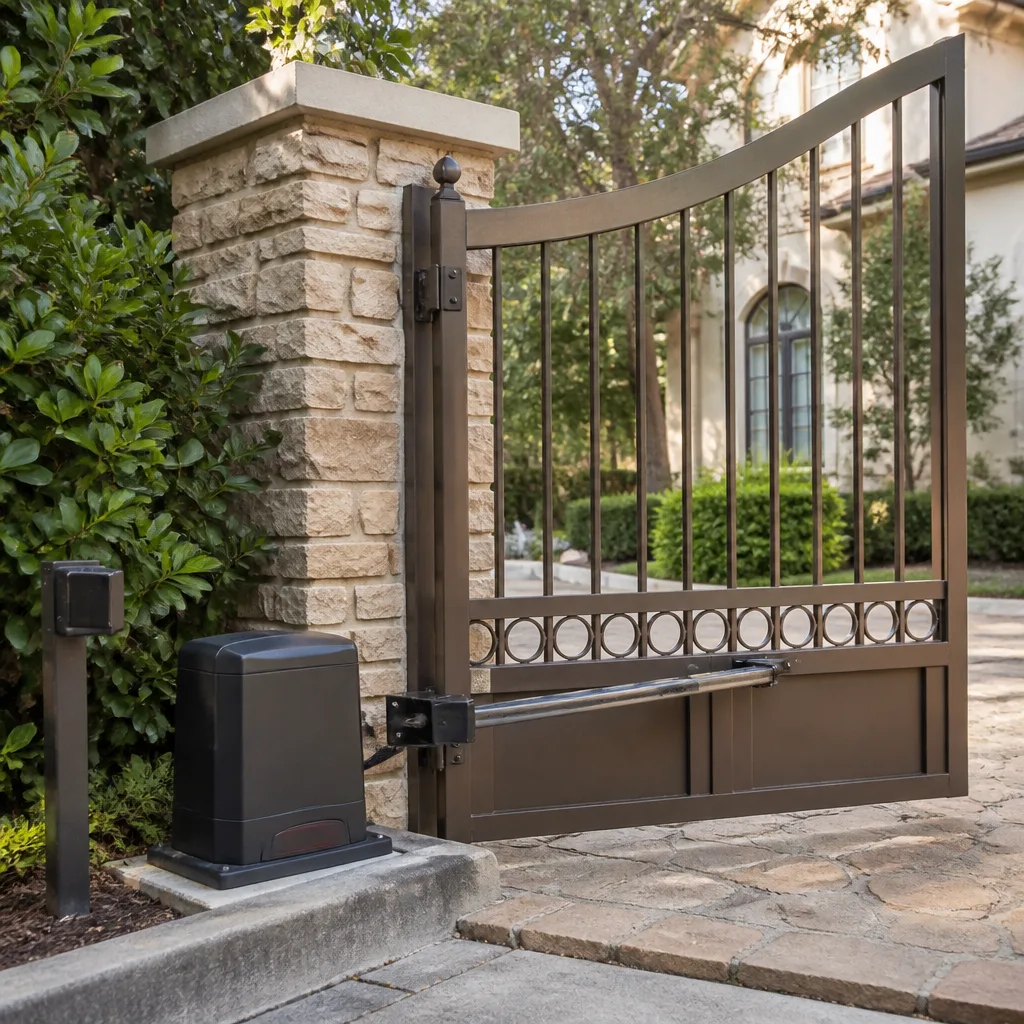
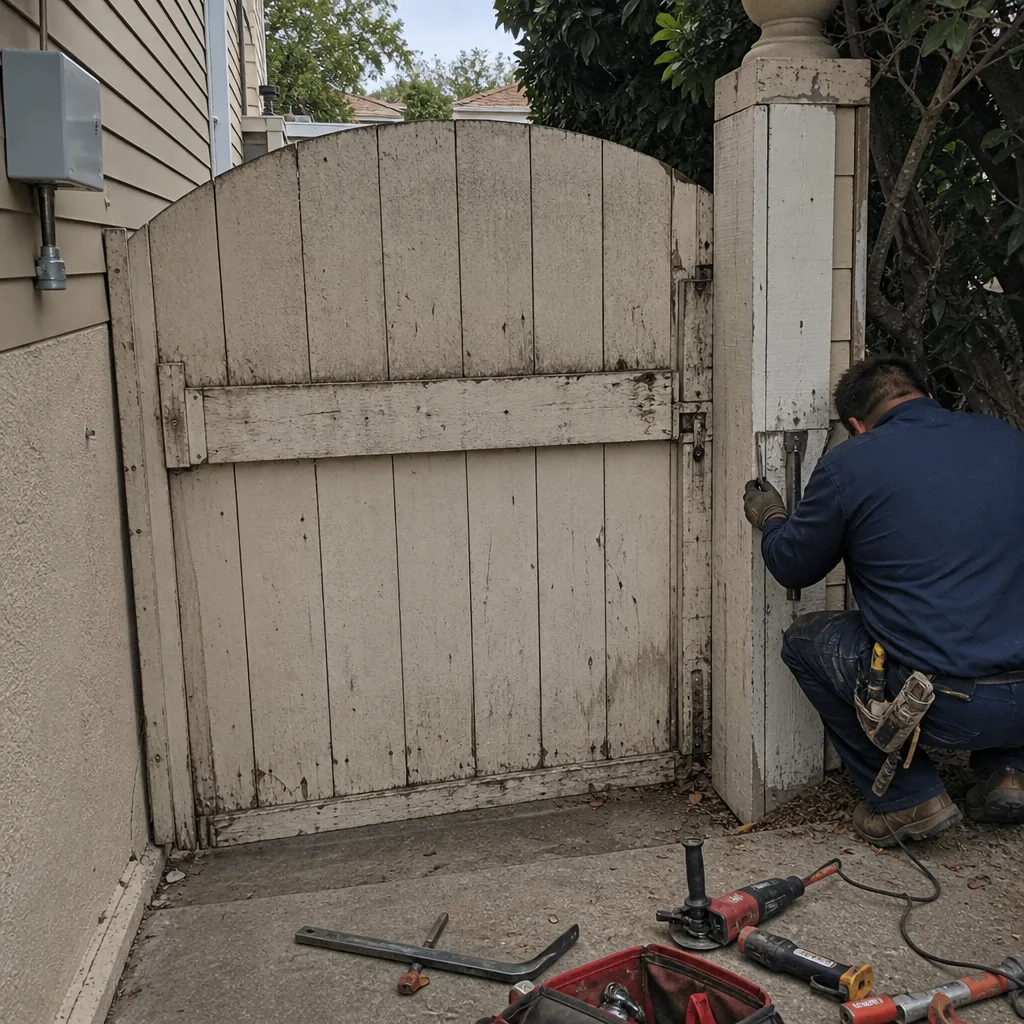 Before
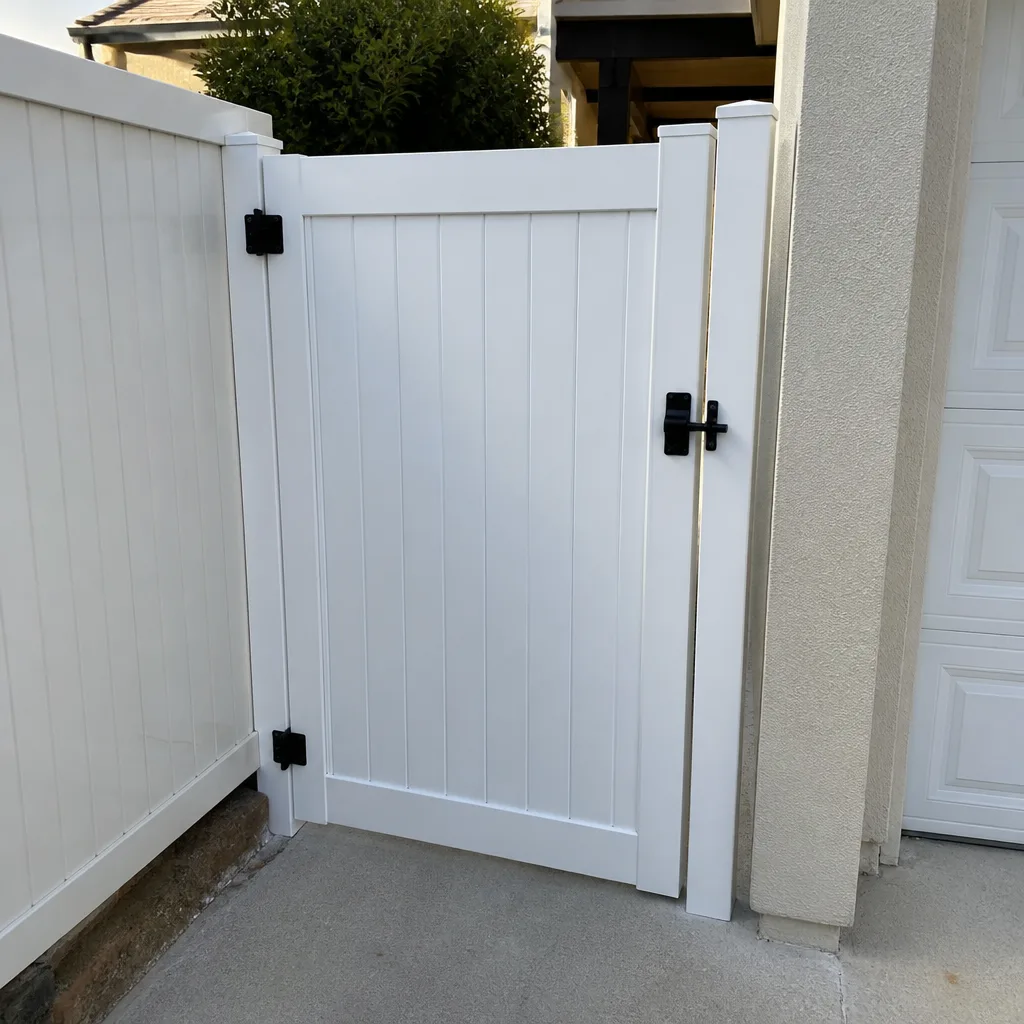 After
After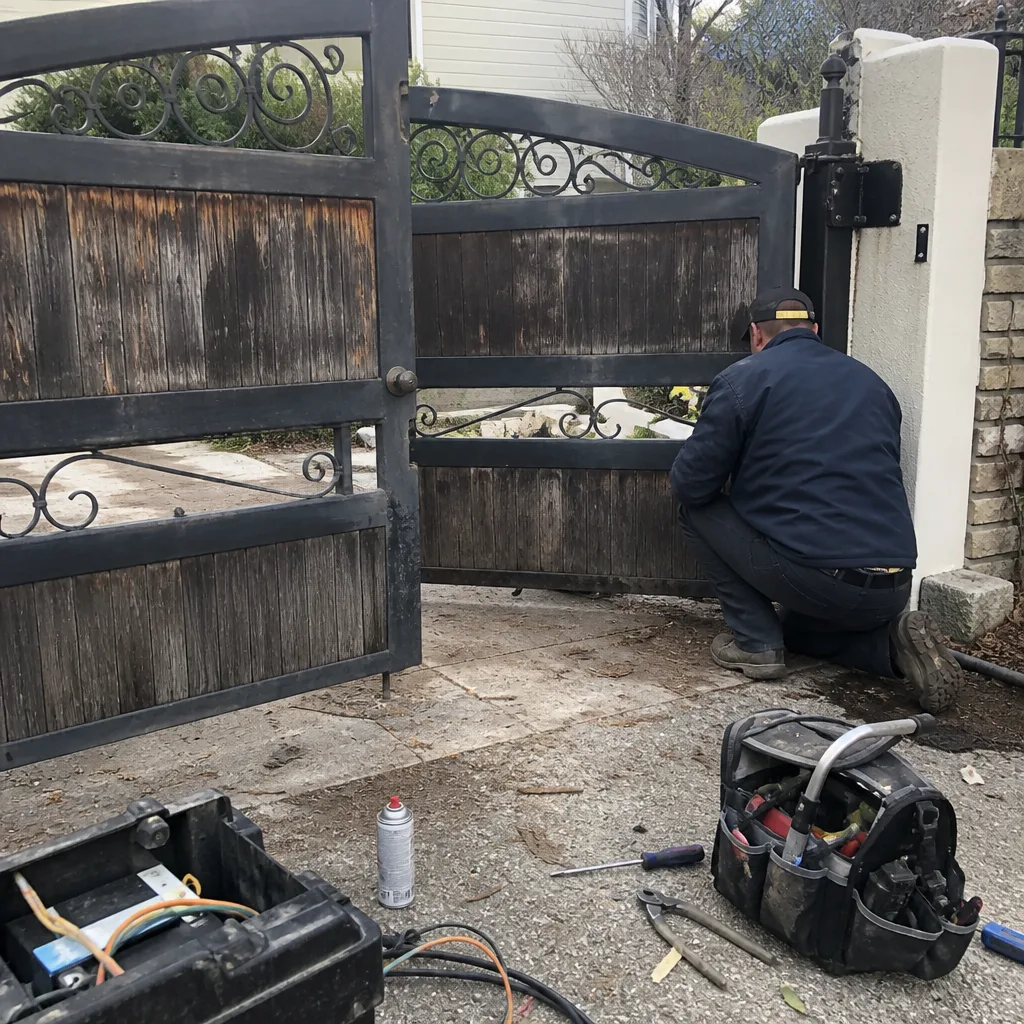 Before
 After
After Before
 After
AfterGate Repair Warning Signs: A Newport Beach Homeowner’s Reference Guide
Most gate failures don’t happen suddenly. They announce themselves weeks in advance, through small changes in sound, speed, and movement that are easy to dismiss as normal wear. We’ve found that homeowners who catch these early signals typically spend $150 to $450 on a repair, while those who wait for a full breakdown often face $900 to $2,800 for motor replacement or structural welding. By the time a Newport Beach gate refuses to open on a Monday morning, the underlying problem has usually been developing for months. This guide walks through the warning signs we look for on every Ironworks Gate Co. home service call, what each one means, and which ones demand immediate attention before a minor adjustment turns into a full replacement.
Quick Answer
The most common gate repair warning signs in Newport Beach are a gate that moves slower than it did a year ago, a motor that hums but doesn’t engage, visible rust at the hinge welds, sagging at the free-swinging end, a remote or keypad that works only intermittently, and a grinding or squealing sound during operation. Any one of these is worth a professional inspection; two or more usually mean a component is actively failing. In our experience across Newport Beach, catching these early saves homeowners 60% or more compared to waiting for a full breakdown.
Table of Contents
- Sound Warning Signs: What Your Gate Is Telling You
- Movement Warning Signs: Speed, Jerking, and Sag
- Structural Warning Signs: Rust, Welds, and Hinges
- Automation Warning Signs: Motors, Remotes, and Keypads
- Why Newport Beach Coastal Air Accelerates Gate Wear
- What to Check on Your Gate This Month: A 10-Point Inspection
- Repair vs. Replace: How to Know When It’s Time
- Common Mistakes to Avoid
- When to Call a Professional
- Frequently Asked Questions
Sound Warning Signs: What Your Gate Is Telling You
A properly functioning gate makes a consistent, low sound: the steady whir of the motor, the soft click of the limit switch, the faint rumble of wheels on track. When that sound changes, the gate is telling you something specific. Here are the sounds we hear most often on Newport Beach service calls and what each one means.
Grinding or Metallic Scraping
A grinding sound during gate travel almost always points to one of three things: a drive gear with worn teeth, a chain that has lost tension and is dragging against the housing, or a wheel bearing that has run dry. On LiftMaster and FAAC operators, the nylon drive gear is a common wear point after 5 to 8 years of daily cycles. On Viking and Linear slide gates, the steel drive chain stretches and begins to skip if not adjusted. Grinding never resolves on its own. Each cycle shaves metal off the affected part, and the repair cost climbs the longer it runs.
Squealing or High-Pitched Whine
A squeal typically means a belt is slipping or a pulley bearing is dry. BFT swing operators use a belt drive on many models, and when that belt glazes over from sun exposure and heat, the motor spins but the gate moves sluggishly. The squeal is the belt slipping on the pulley. This is an inexpensive fix if caught early (a belt replacement on most models runs $120 to $260 in Newport Beach), but a neglected belt eventually snaps, and the repair becomes a motor rebuild.
Loud Humming with No Movement
This is the sound homeowners describe most often: the motor runs, but the gate sits still. On hydraulic operators, a hum with no movement usually means low fluid or a failed pump. On electromechanical operators, it means the capacitor has failed and the motor can’t build starting torque. Either way, continuing to press the remote burns out the motor windings. If you hear a hum and no movement, stop using the gate and call for service.
Clicking, Then Nothing
A single click from the control board followed by nothing usually points to a failed start capacitor or a tripped thermal overload. Multiple rapid clicks suggest a relay chattering, often from low voltage at the board or a failing transformer. These are board-level issues. They are not DIY fixes. A trained technician can usually diagnose the exact cause in under 30 minutes with a multimeter.
Movement Warning Signs: Speed, Jerking, and Sag
Sound is only half the story. The way a gate moves tells you just as much about its health, and movement changes are often the earliest warning sign of all.
The Gate Moves Slower Than It Used To
This is the number one early warning sign we see in Newport Beach, and it is also the most ignored. A gate that took 12 seconds to open last year and takes 18 seconds now is not “just getting older.” Something is creating resistance. The usual culprits: a wheel bearing losing lubrication, a hinge pin corroding, a motor running on a failing capacitor, or a leaf that has settled into the track. None of these fix themselves. A slow gate becomes a stopped gate, usually within 3 to 6 months.
Jerky or Hesitating Movement
A gate that stutters, pauses mid-travel, or moves in small lurches is signaling an intermittent problem. Common causes include a loose wire at the motor terminal, a limit switch that is out of adjustment, a gear with a broken tooth that catches on every revolution, or a sensor that is activating and deactivating. Intermittent problems are the most frustrating because the gate works sometimes, but they are also the most likely to strand you outside on a day when you are already running late. We tell homeowners: if it hesitates even once a week, the problem is real and getting worse.
Sagging at the Free End
On a swing gate, the end farthest from the hinge post should sit level with the hinge end. If it dips, the gate is sagging. In Newport Beach, where post footings sit in sandy or expansive soil, this is common after 10 to 15 years. A sagging gate puts all its weight on the motor, forcing it to work against gravity on every cycle. The motor will fail prematurely. The fix is usually hinge replacement or a new post footing, both of which are far cheaper than a new motor.
The Gate Reverses for No Reason
A gate that stops and reverses mid-travel is usually tripping a safety sensor. On newer installations in Newport Beach, California law requires photo eyes and reversing edges on all automatic gates. If a leaf blows across the photo eye beam, or if a spider web covers the lens, the gate reverses. But a gate that reverses constantly, with no obstruction visible, often has a misaligned sensor or a failing safety edge, and that is a repair call, not an inconvenience.
Structural Warning Signs: Rust, Welds, and Hinges
The steel and iron that make up a gate are only as strong as their weakest connection. In a coastal environment like Newport Beach, that weakness is usually corrosion.
Rust at the Hinge Welds
Rust anywhere on a gate is a warning sign, but rust at the hinge welds is the one we take most seriously. The hinge carries the entire weight of the gate leaf, and a weld that is corroding from the inside looks fine on the surface until the day it lets go. On Balboa Island and Lido Isle, where salt spray and morning marine layer are constant, we see hinge weld failures on gates as young as 8 years. The telltale sign is a rust stain running down from the hinge, often accompanied by a gritty feeling when the gate moves. A gate hinge is a high-tension component. When a gate leaf tears free at the hinge, it can weigh 300 to 800 pounds, and it falls with enough force to injure anyone in its path. If you see rust weeping from a hinge, stop using the gate and call a professional.
Loose or Worn Hinge Pins
A hinge pin should spin freely but fit snugly. When the pin wears down or the hinge barrel elongates, the gate develops play. You can feel it: grab the gate at the free end and lift. Any vertical movement means the hinge is worn. Left alone, a worn hinge causes the gate to bind at the latch and stresses the motor. Hinge replacement on a standard Newport Beach residential gate typically runs $280 to $650 per hinge, depending on size and whether the post needs reinforcement.
Cracks in the Gate Frame
Steel gates crack at stress points: the corners of the frame, the attachment points for the operator arm, and anywhere the gate has been hit hard. A hairline crack in a 40-year-old wrought iron gate is not just cosmetic. It is a stress fracture that will grow with every cycle. In Newport Beach, many homes have original gates from the 1970s and 1980s, and those gates have now outlived their original welds. Cracked frames can usually be welded in place by a company that does its own fabrication. A mobile welder who understands gate geometry can repair most cracks in a single visit.
Gate Posts That Have Shifted
A gate post that leans, or has pulled away from its base, is a structural failure in progress. In Newport Beach, the combination of sandy soil and occasional heavy rain creates movement at the footing. A post that has shifted 2 inches changes the entire gate geometry: the latch misses, the operator arm binds, and the gate fights itself on every cycle. The fix is resetting the post in a new footing with proper depth, which is a 1 to 2 day job. It is not an emergency, but it also will not wait gracefully.
Automation Warning Signs: Motors, Remotes, and Keypads
The automation system is where most catastrophic failures originate, and the warning signs here are often the easiest to spot.
The Remote Works Only Sometimes
A remote that works from 50 feet one day and 5 feet the next is not a weak battery. It is usually one of three things: a failing receiver board in the operator, a remote that is drifting off frequency, or interference from a new electronic device near the gate (outdoor security cameras, new LED landscape lighting transformers, even a neighbor’s new gate system). If a fresh battery does not fix the problem immediately, the issue is in the receiver or the environment. On LiftMaster and Linear operators, the receiver is a replaceable board. On FAAC and BFT units, it is often integrated into the main control board, and the repair cost is higher. Either way, do not wait until the remote stops working entirely. The failure is progressive.
The Keypad Works Intermittently
A keypad that sometimes accepts the code and sometimes does not is usually suffering from one of two problems: moisture intrusion into the keypad housing, or corroded wiring at the terminal block. Newport Beach’s morning marine layer condenses on keypad electronics, and over time, the connections corrode. This is a $95 to $250 repair if caught early. If the keypad shorts completely, it can damage the control board, and that repair runs $400 to $900.
The Gate Opens but Won’t Close (or Vice Versa)
A gate that completes one direction but refuses the other is telling you something specific. The most common cause is a misaligned limit switch: the operator thinks the gate has reached the end of its travel when it hasn’t, and it shuts down the circuit. Other causes include a failing safety edge that is sending a false obstruction signal, or a relay on the board that has welded closed. This is not a “wait and see” situation. A gate stuck open is a security issue; a gate stuck closed is a stranded car.
The Motor Runs Hot or Smells Acrid
An electric motor that is overheating will emit a sharp, acrid smell that resembles burning plastic or hot varnish. This is the insulation on the motor windings breaking down. It happens for a reason: a gate that is binding, a capacitor that is failing, a duty cycle that is too heavy for the motor’s rating, or a motor that has simply reached the end of its service life. If you smell that hot electrical smell near the gate operator, shut off power to the gate at the breaker and call for service. Running a hot motor until it seizes turns a $350 component replacement into a $1,200 full operator replacement.
Why Newport Beach Coastal Air Accelerates Gate Wear
Newport Beach is harder on gates than almost any other city in Orange County, and the reason is simple: salt. Homes in Corona del Mar, Balboa Peninsula, Lido Isle, and Newport Coast sit close enough to the ocean that airborne salt particles settle on every exposed metal surface. That salt combines with the morning marine layer to create a corrosive film that works on steel, iron, and even the aluminum housings of gate operators.
What this means for your gate, in practical terms:
- Hardware fails faster. Hinge pins, gate rollers, chain links, and operator arms in Newport Beach typically need replacement 2 to 4 years sooner than the same components inland. We see 8-year-old Newport Beach gates with the corrosion of a 15-year-old inland gate.
- Electronics corrode from the inside. Control boards and wiring terminals oxidize in the salt air. A board that looks fine on the outside may have green corrosion on the solder joints. This is the leading cause of “mystery” electrical problems on Newport Beach gates: no visible damage, but intermittent failures.
- Powder coating is not optional. On a coastal gate, an unpainted or poorly painted steel surface begins rusting within 12 months. A proper powder coat, applied after sandblasting, is the difference between a gate that lasts 10 years and one that lasts 40.
- Stainless steel hardware matters. Standard zinc-plated bolts and hinges, which work fine in inland cities like Tustin or Orange, corrode quickly in the marine layer. Newport Beach gates need stainless or galvanized hardware, especially at the hinges and operator attachment points.
The practical takeaway: if you own a gate in Newport Beach, you should inspect it more often than the national average, and you should budget for hardware replacement sooner. A gate that would last 20 years in Riverside will need significant hardware work at year 12 in Newport Beach. That is not a defect. It is the coast, doing what the coast does.
What to Check on Your Gate This Month: A 10-Point Inspection
We built this inspection list for homeowners who want to catch problems before they become repairs. It takes 10 minutes, requires no tools beyond your eyes and ears, and it will tell you whether your gate needs professional attention. Run through this list once a month. Most of these checks are visual and auditory observations. For anything that requires working on a tensioned component like a spring or a motor, we recommend calling a trained technician rather than attempting the repair yourself. A gate under tension can release energy suddenly, and the motor capacitors hold a charge even after power is disconnected.
- Listen to the full cycle. Stand near the gate and open it, then close it. Note any grinding, squealing, clicking, or humming. Compare what you hear to what you remember from six months ago.
- Time the travel. Count the seconds from open to closed. If the gate takes noticeably longer than it used to, something is creating resistance.
- Watch for hesitation. The gate should move smoothly through its entire arc. Any pause, jerk, or stutter is a warning sign.
- Check the hinges. Look at each hinge for rust stains, cracks in the surrounding metal, or gaps between the hinge leaf and the post. Grab the gate at the free end and lift upward. Movement means worn hinge pins.
- Examine the welds. Run your eyes along every weld line: at the hinges, at the frame corners, at the operator arm bracket. Look for hairline cracks or rust-colored weep lines.
- Test both remotes. Stand at your normal parking distance and test each remote. Then back up 20 feet and test again. Weak or inconsistent range means a receiver or remote issue.
- Test the keypad. Enter your code slowly, then at normal speed. If the keypad misses a digit or requires multiple tries, moisture or corrosion is building up inside.
- Check the safety sensors. Wave your hand in front of each photo eye while the gate is closing. The gate should stop and reverse immediately. If it doesn’t, the safety system has failed and needs immediate attention.
- Inspect the track or gate path. Look for debris, pebbles, or plant growth in the gate’s path. A single obstruction can cause the safety system to activate and mimic a mechanical failure.
- Look at the operator housing. Look for rust, water stains, or signs of insect nesting around the operator. Ants, in particular, are drawn to the warmth of control boards and can cause short circuits. Ant intrusion is a common cause of control board failure in Newport Beach.
If everything checks out, your gate is in good shape, and you have just given yourself a month of peace on that front. If you find two or more issues on the list, call for a professional inspection before the problems compound.
Repair vs. Replace: How to Know When It’s Time
The question we hear most often from Newport Beach homeowners is whether a failing gate should be repaired or replaced. The honest answer depends on three factors: the condition of the steel, the condition of the automation, and the age of the installation.
When Repair Makes Sense
- The gate frame is straight and solid, with only surface rust or minor weld cracks
- The operator is under 8 years old and the failure is a single component: a capacitor, a belt, a limit switch, a receiver board
- The hinges are worn but the posts are still solid in their footings
- The gate is a custom design or a matching pair with the neighbor’s, where replacement would mean losing the architectural character
When Replacement Makes More Sense
- The gate frame has extensive rust through the metal, not just on the surface
- Multiple welds have failed or the gate has been hit and bent
- The operator is over 12 years old and the manufacturer has discontinued parts
- The posts have shifted in their footings and the concrete itself is cracked
- You have already spent $800 or more on repairs in the past 18 months and the gate is still not right
A good rule of thumb: if the repair cost exceeds 50% of the replacement cost for a gate or operator of similar quality, and the existing unit is more than 10 years old, replacement is usually the better long-term decision. We give every Newport Beach customer a straight answer on this. We will not recommend replacement when a repair will serve you well, and we will not pad a repair bill when a replacement is the honest call. That is the whole point of having a company with 42 years of gate experience and no incentive to oversell: the advice comes from the trade, not from a sales target.
Newport Beach Replacement Cost Context
For budgeting purposes, a residential gate replacement in Newport Beach typically runs $2,800 to $8,500 for a single swing gate with new operator, depending on size, material, and design complexity. A full slide gate replacement runs $4,000 to $12,000. These ranges include the gate leaf, operator, safety edges, photo eyes, and installation. Custom iron work on estate gates in Newport Coast and Harbor View can exceed $20,000. Every project is quoted in writing before any work begins, and the price on the quote is the price on the invoice.
Common Mistakes to Avoid
- Lubricating a noisy gate to mask the sound. Spraying lubricant on a grinding gear quiets it for a few days, but the gear is still grinding. You have delayed the repair and added lubricant that can attract dust and sand, which accelerates wear. Noise means something is wrong; oil does not fix it.
- Waiting for a breakdown to call. A gate that acts up intermittently is sending a warning. The breakdown is coming. Calling when the gate still works means a small repair on your schedule. Calling when it is stuck open at 10 PM means an emergency call, and emergency pricing.
- Ignoring rust because “it’s just cosmetic.” In Newport Beach, surface rust becomes structural rust faster than inland. A rust bubble on a hinge is a structural problem hiding behind cosmetic paint.
- Replacing batteries in remotes without diagnosing the real issue. If you have replaced the battery twice in six months and the range is still poor, the problem is not the battery. It is the receiver or the remote itself, and continuing to replace batteries only delays the real fix.
- Adjusting the force setting to compensate for a binding gate. Some homeowners, and unfortunately some handymen, turn up the motor’s force adjustment so the gate mushes through whatever is binding. This works for a while and then destroys the motor. The correct fix is to remove the binding, not overpower it.
- Hiring a generalist for gate-specific problems. A general handyman who fixes gates occasionally will not have the diagnostic equipment, the brand-specific parts, or the welding capability to address the real issue. In our experience in Newport Beach, roughly a third of our repair calls are second opinions on gates that a generalist attempted to fix and made worse.
- Putting off a safety sensor repair. In California, automatic gate safety features are not optional. A gate that does not reverse on contact or detect an obstruction is a liability for every homeowner. Repairing the safety system is not a discretionary expense. It is a duty of care, and in Newport Beach, it is a code requirement.
When to Call a Professional
Some gate problems are obvious and urgent. A gate that has stopped moving entirely, a hinge that has cracked, a motor that smokes or smells hot, a gate that does not reverse when it contacts an obstruction: these are calls you make immediately, day or night. A live person answers the phone at (760) 852-5601, 24 hours a day, 7 days a week. Not a voicemail, not an answering service. If a gate is stuck open in Newport Beach, it is a security issue and we treat it that way.
Other problems are slower to develop, but they need the same professional attention before they become urgent: a gate that moves slower than it did, a remote that works only at close range, a hinge with rust weeping from the weld, a post that has shifted in its footing. These are not emergencies, but they are also not going to improve on their own. Ironworks Gate Co. offers free estimates in Newport Beach. Call (760) 852-5601 and we will come out, look at the gate, and tell you exactly what it needs and what it costs. The price is quoted and agreed before any work starts.
Frequently Asked Questions
How much does gate repair cost in Newport Beach?
Most gate repairs in Newport Beach run between $150 and $900, depending on the component. Hinge replacements typically run $280 to $650 per hinge, remote receiver repairs run $150 to $400, capacitor replacements run $95 to $250, and full operator replacements run $900 to $2,800 including installation. Every repair is quoted in writing before work begins, so the price on the quote is the price you pay. Call (760) 852-5601 for an exact quote. Estimates are free.
What is the most common gate problem in Newport Beach?
In our experience, the single most common gate problem in Newport Beach is corrosion-related failure: hinge pins, gate rollers, and control board connections that degrade faster in the salt air than they would inland. The second is misaligned safety sensors, usually caused by wind, plant growth, or a shifted post. Both are fixable in a single visit by a technician who carries the right parts.
Can you come today if my gate is stuck?
Yes. We keep same-day availability for Newport Beach repair calls, and a live person answers the phone 24 hours a day, 7 days a week. If your gate is stuck open, stuck closed, or operating unsafely, call (760) 852-5601 and we will get a technician to you as fast as the day allows.
How long should a gate opener last in Newport Beach?
A quality gate opener, properly installed and maintained, should last 8 to 12 years in Newport Beach. The coastal air shortens that lifespan by 2 to 3 years compared to inland installations, and an opener that is asked to move a binding or sagging gate will fail significantly sooner. Regular maintenance, including hinge lubrication, sensor alignment, and board inspection, is the best way to extend the life of your operator.
Do you repair all gate brands?
Ironworks Gate Co. is trained and equipped to service nine major gate-automation brands, including FAAC, BFT, Linear, and Viking, plus LiftMaster, Ghost Controls, DoorKing, Elite, and Mighty Mule. We do not send a technician out to guess. We identify the brand and model on the first call and arrive with the correct parts.
What does the 90-Day Done Right Promise cover?
Every completed gate repair and installation is covered by the 90-Day Done Right Promise, which we call the Keystone Standard. If something is not right within 90 days of the job, we come back and make it right. No paperwork, no arguing, no exceptions. It is a written guarantee on every job, and it has been Ironworks Gate Co.’s standard for over 42 years. Call (760) 852-5601 and ask about it.
How often should a Newport Beach gate be serviced?
For a gate that operates daily, we recommend a professional tune-up once a year. In Newport Beach’s coastal environment, that annual visit catches corrosion early, keeps hinges and rollers lubricated with marine-grade grease, and extends the life of the operator. Ironworks Gate Co. offers an $89 Seasonal Tune-Up for exactly this purpose. Seniors and veterans always receive a 5% discount on any service.
The Bottom Line
A gate that is making noise, moving slowly, sagging at the hinge, or working intermittently is sending a clear signal. These warning signs do not resolve themselves, and they do not improve with time. In Newport Beach, where salt air accelerates every failure mode, the gap between “minor repair” and “full replacement” is shorter than in most cities. The good news is that most gate failures announce themselves weeks in advance, and a homeowner who listens can save hundreds or thousands of dollars by acting early. The Ironworks Gate Co. home team has been doing this work in Newport Beach for over 42 years, and we built this guide so you know what to watch for and when to call. When the time comes, the number is (760) 852-5601. A live person answers, every time.
Written by Victor Salinas, Owner at Ironworks Gate Co., serving Newport Beach since 2013.