
Last updated August 25, 2026
Free on-site gate assessment - hinges, posts, and your LiftMaster or Nice gate operator checked before anything is quoted
The assessment is free and the quote is the invoice.
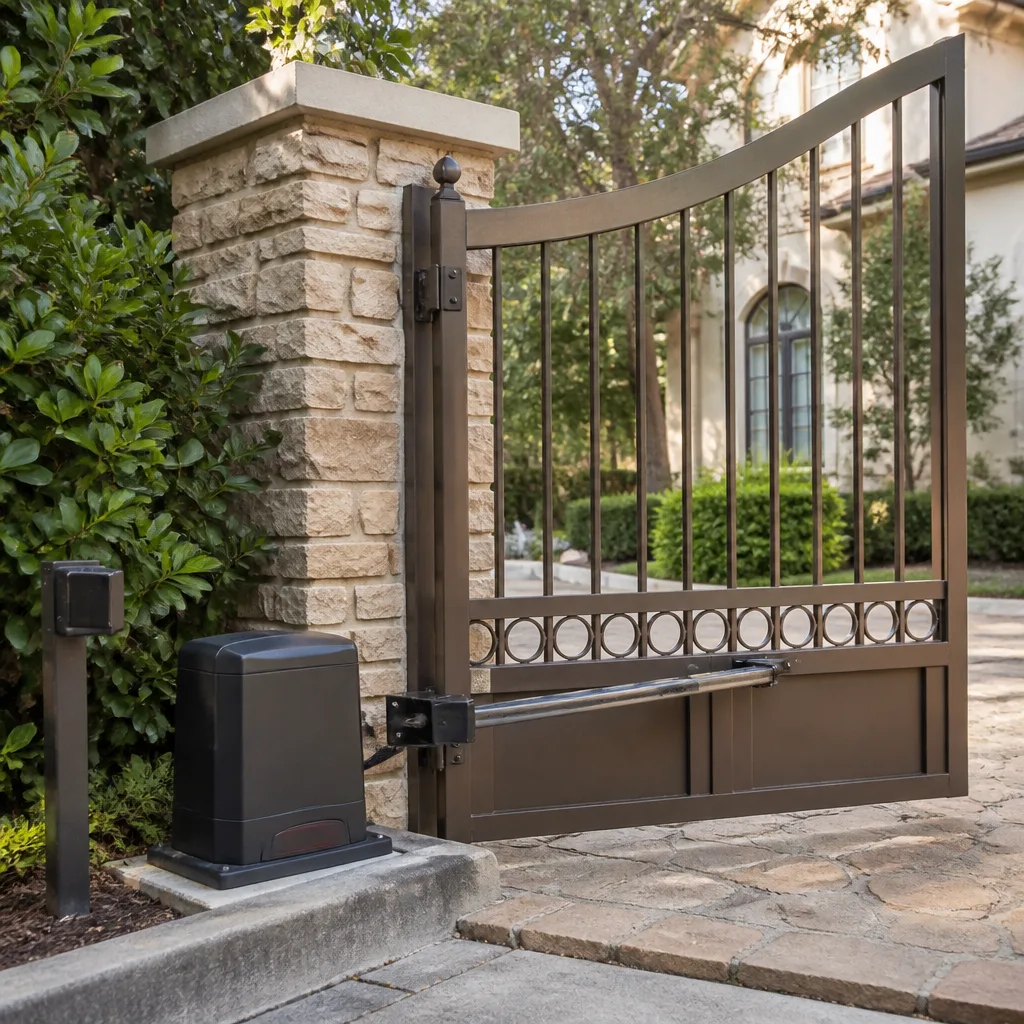
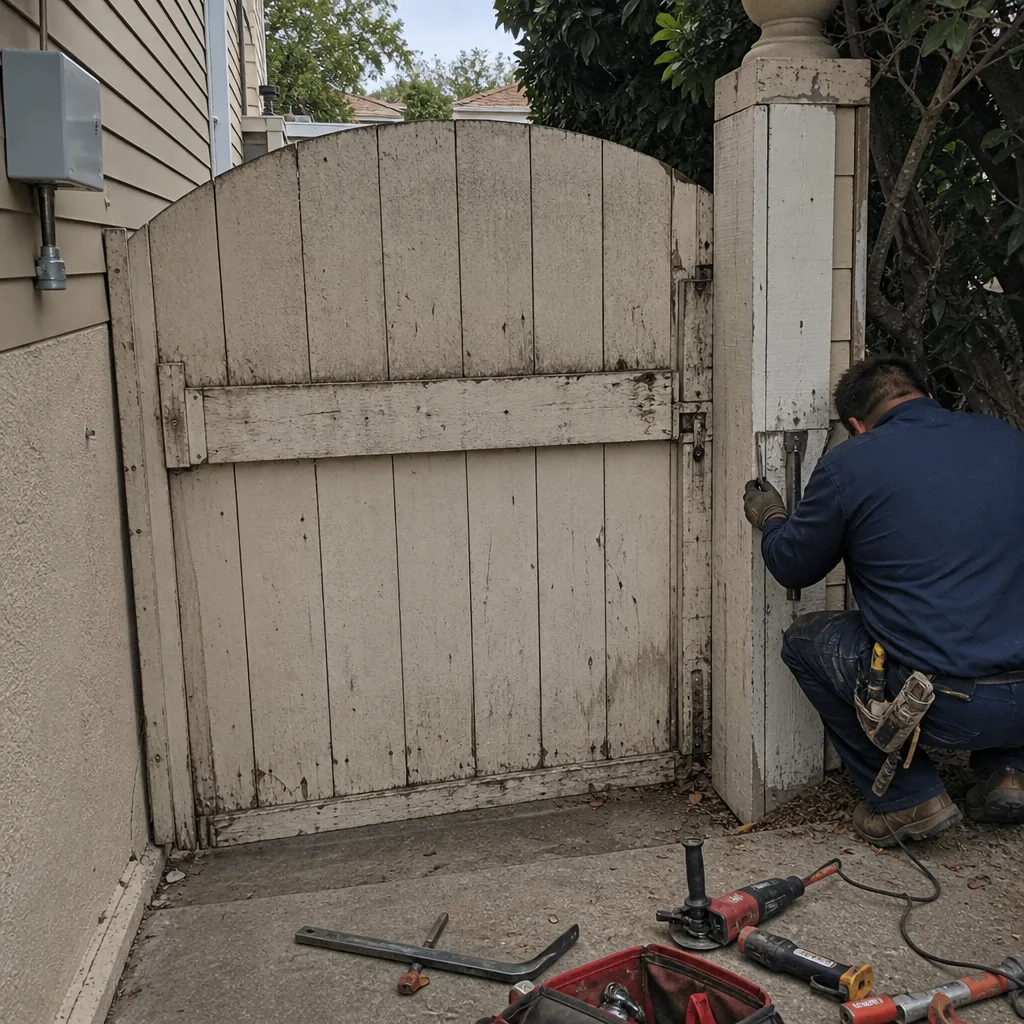 Before
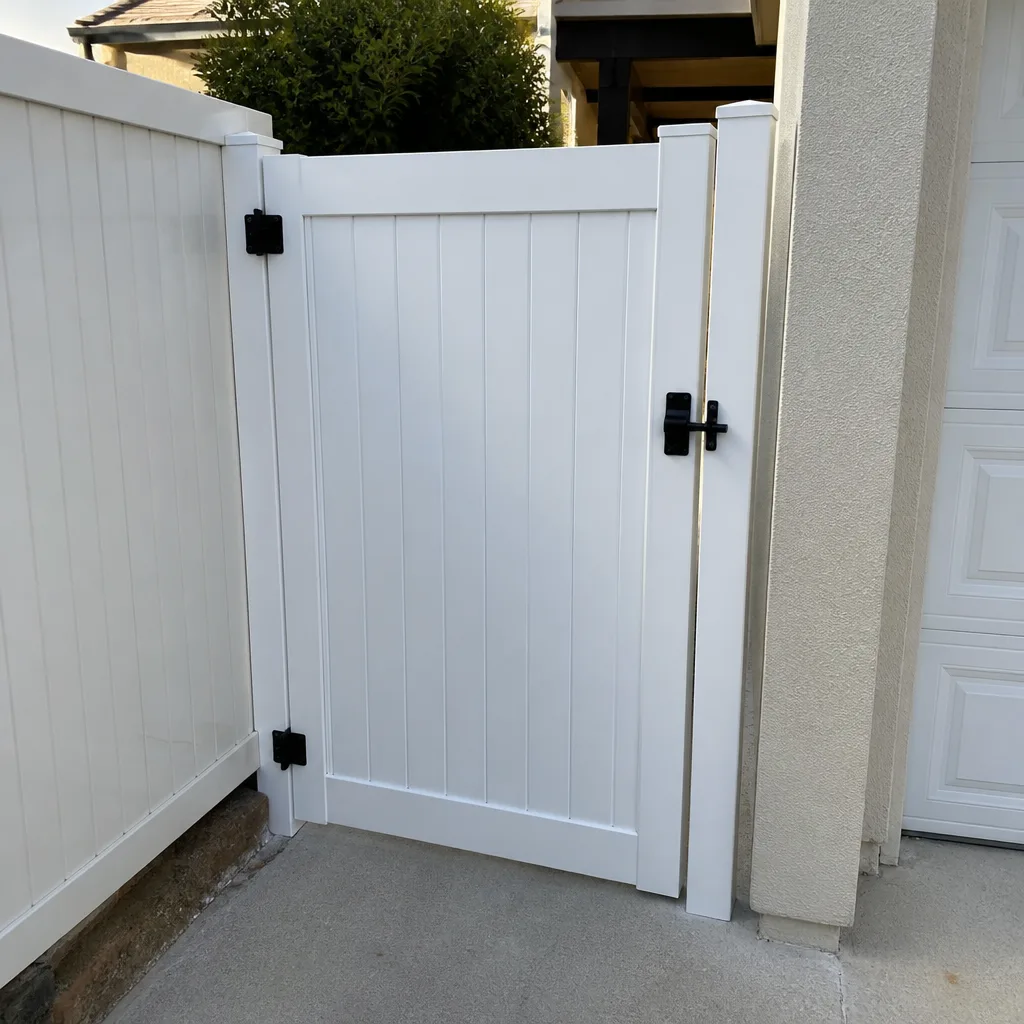 After
After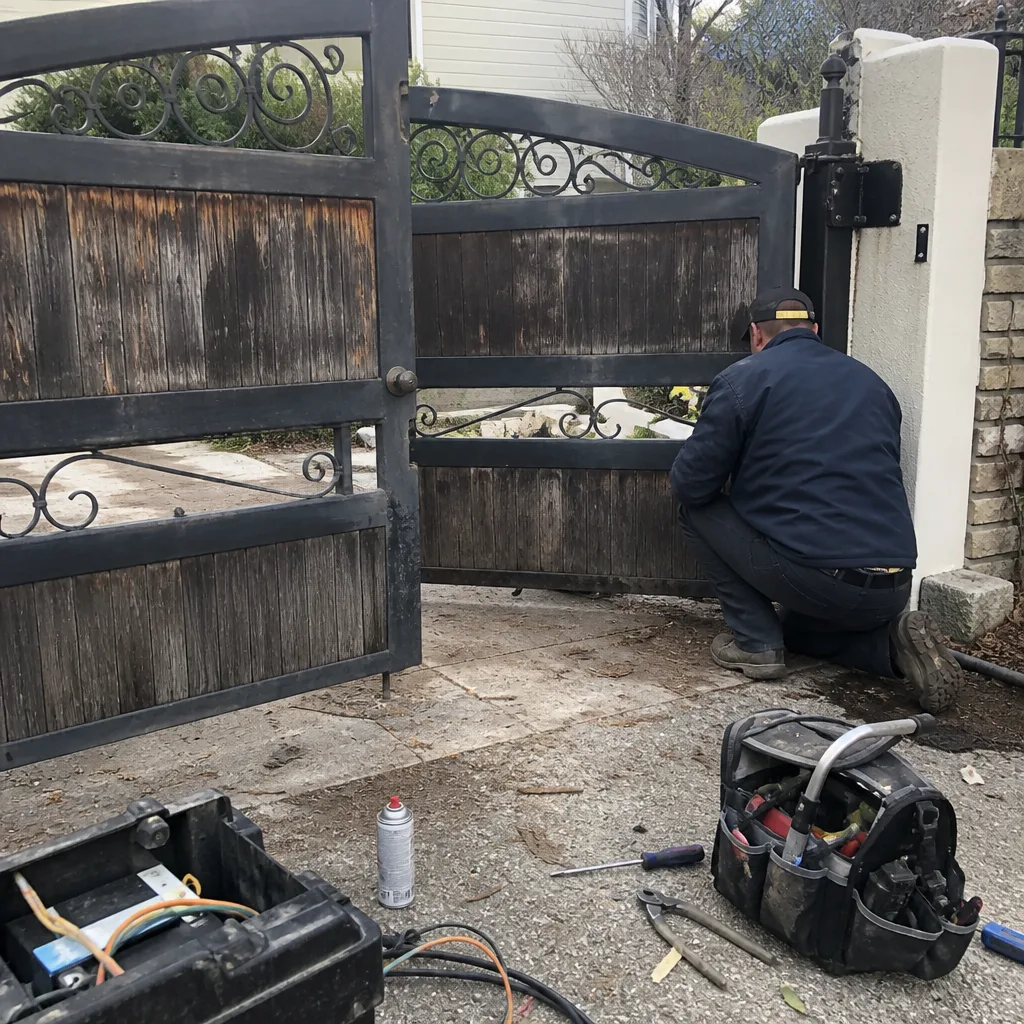 Before
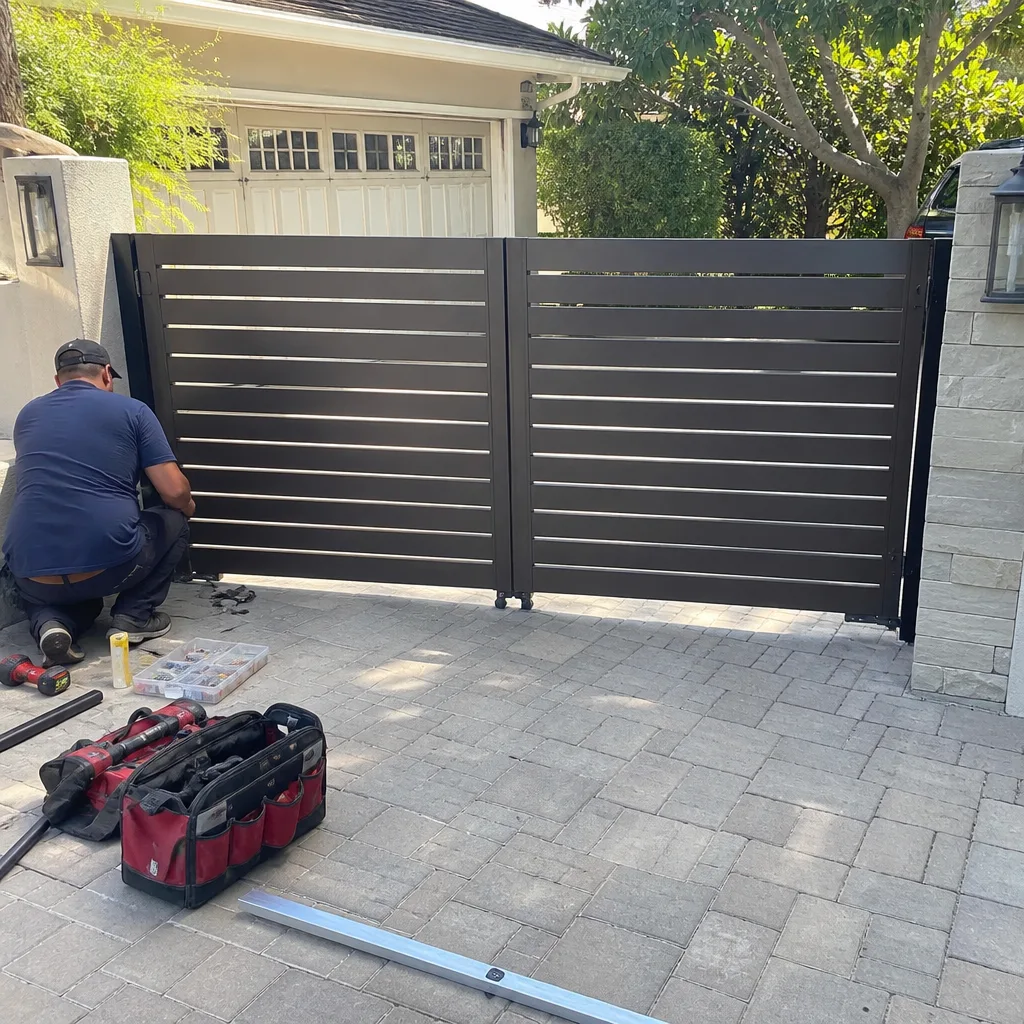 After
After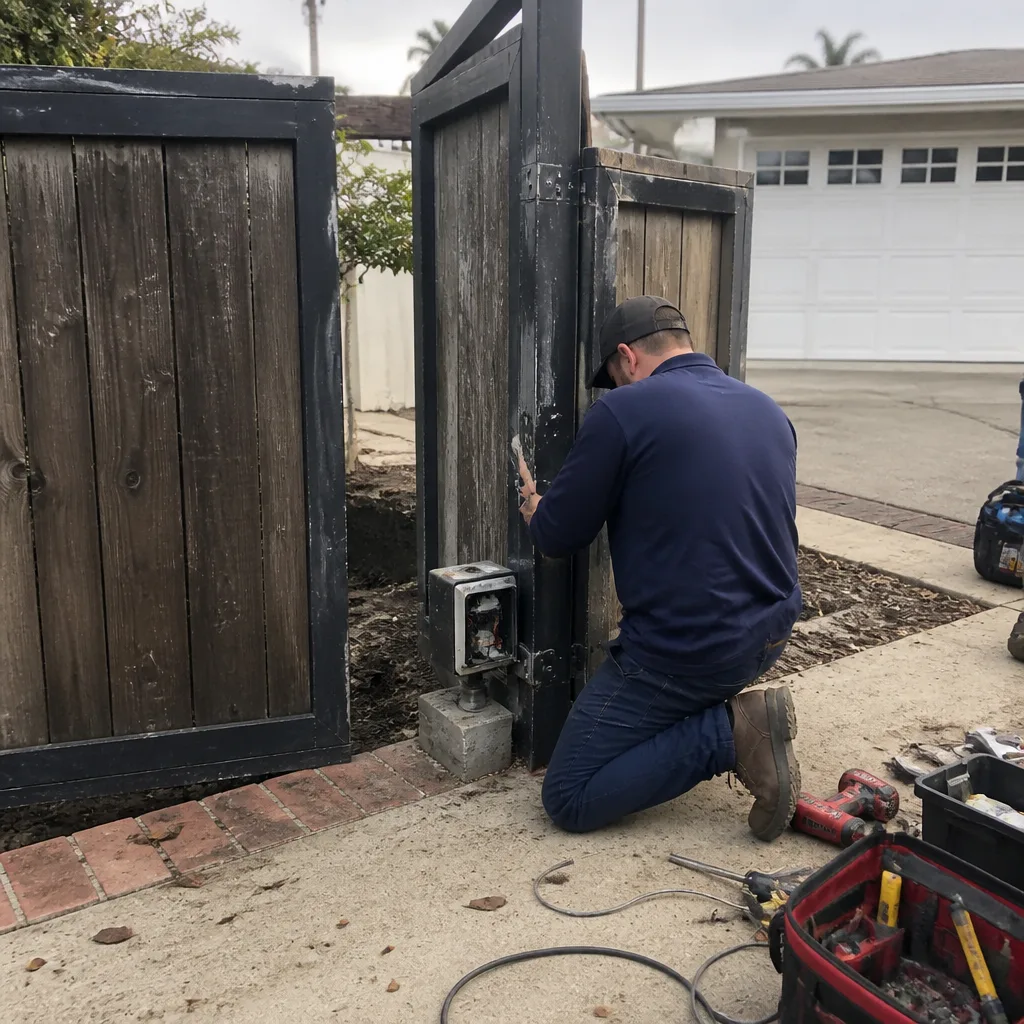 Before
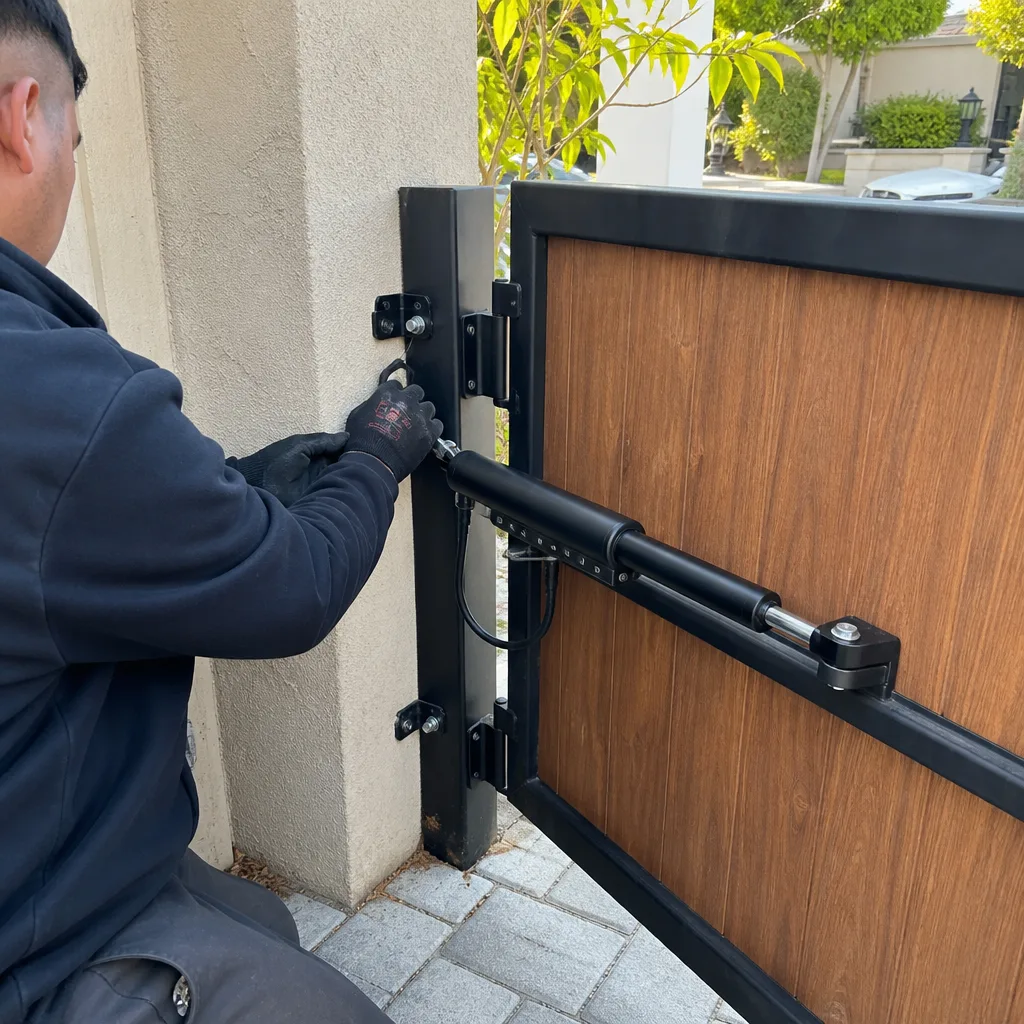 After
AfterSeasonal Gate Repair Care for Newport Beach: Year-Round Homeowner’s Guide
A driveway gate in Newport Beach gets worked harder than most people realize. Salt air, sun exposure, and automation cycles add up fast. We’ve repaired gates in Newport Beach that looked fine from the curb but were a month away from a hinge failure that would have left the owner’s car stuck in the driveway. This guide covers what changes with each season, what to check, what to leave alone, and when a phone call is cheaper than a fix.
Quick Answer
Seasonal gate care in Newport Beach means checking hinges, wheels, and automation settings four times a year, with special attention to salt-air corrosion in summer and winter storm debris in January and February. A homeowner can handle cleaning, lubrication, and visual checks in about 20 minutes per season. Motor calibration, hinge replacement, welding, and any work involving torsion springs or high-tension cables should be left to a trained technician.
Table of Contents
- Why Newport Beach Is Different from Most Cities
- What Every Seasonal Check Covers
- Winter: January and February
- Spring: March through May
- Summer: June through August
- Fall: September through November
- Lubrication and Cleaning Materials That Work
- Common Mistakes to Avoid
- When to Call a Professional
- Frequently Asked Questions
- The Bottom Line
Why Newport Beach Is Different from Most Cities
Most gate maintenance advice online is written for inland climates. Newport Beach has a specific set of conditions that change how a gate wears. The marine layer that rolls through Balboa Peninsula and Lido Isle deposits salt on metal surfaces most mornings between May and July. Salt accelerates rust on unpainted steel, corrodes aluminum if the powder coating is chipped, and works its way into hinge pins where it acts like sandpaper.
Sun is the second problem. A west-facing gate in Corona del Mar or Newport Coast gets direct afternoon sun for most of the year. UV breaks down powder coating, fades the finish, and dries out the plastic bushings inside gate wheels and rollers. A gate in the sun also heats the motor housing. Automation electronics run hotter, which shortens their life.
Wind is the third factor. Coastal gusts off the Pacific push against a solid wood or composite gate panel with real force. That constant pressure finds weak points in the hinges and the mounting posts. In our experience, homes near the bluffs above Big Corona see more post-lean and hinge fatigue than homes in the flats of Mariners or the Port Streets.
The result is that a Newport Beach gate does not follow the same maintenance calendar as one in Irvine or Tustin. The checks are similar. The urgency and the order of importance are not. Salt and wind are the priorities here.
What Every Seasonal Check Covers
A good seasonal check takes about twenty minutes and does not require special tools. The point is to catch small issues before they become repairs. Here is the order we recommend.
- Listen to the motor. Open and close the gate once from the keypad or remote. It should sound smooth, not labored. A motor that grinds, clicks repeatedly, or runs longer than usual is telling you something.
- Check the wheels and track. Look at the bottom of the gate. Wheels should sit square on the track. Sand, leaves, and rust flakes from the track itself build up here faster than anywhere else.
- Inspect hinge pins and bolts. Check for rust streaks running down from the hinge, which mean water is getting inside. Try to wiggle the gate by hand. More than a quarter inch of play means a hinge or wheel needs attention.
- Check the safety edges and photo eyes. Wipe the photo eye lenses with a dry cloth. Test the safety edge by placing a hand against it while the gate closes. It should reverse immediately. If it does not, stop using the automatic closer and call us.
- Look at the finish. Walk the full length of the gate panel. Note any chips, cracks, bubbles in the powder coat, or bare metal. In Newport Beach, bare metal in marine air starts rusting within weeks.
- Clear the gate path. Remove anything stored near the track or hinges, including landscape debris, toys, and trash bins. Plants growing against a gate hold moisture against the metal.
Write down anything you find. A one-sentence note in your phone takes five seconds and gives a technician a head start if a repair is needed later.
Winter: January and February
Newport Beach winters are mild, but they are not easy on gates. This is the rainy season. Water is the main threat, and the marine layer gives it a salt content that lingers after the rain stops. In neighborhoods like Westcliff and Dover Shores, the winter storm drain runoff carries sand and silt that gets pushed onto gate tracks by passing cars.
What to do in winter:
- After a storm, clear the gate track of mud and leaves before the gate cycles. Wet debris packs down and then dries into a hard crust that the wheels must grind through.
- Check hinge drains. Many Newport Beach gates have small weep holes at the bottom of the hinge leaves. If the hole is blocked, water sits in the hinge and rusts the pin from the inside.
- Watch the motor’s travel limits. Moisture causes wooden gates to swell. A gate that scrapes the ground in January may fit fine in August. If the motor strains or reverses mid-cycle after rain, the limits need adjustment.
- Test the keypad and key switch. Rain and salt spray are hard on gaskets and contacts. A keypad that works intermittently in winter usually fails completely by spring.
One thing we see every winter in Newport Beach is rust bleeding through white gate paint. It starts as a thin orange streak, usually at a bolt head or a seam. Left alone through one rainy season, it becomes a repair. Caught early, it is a touch-up job.
Spring: March through May
Spring is the easiest season on a Newport Beach gate, which is why it is the best time to handle maintenance that was put off. The rain has mostly stopped, the summer heat has not arrived, and the marine layer still provides cool mornings. This is the window for deep cleaning and lubrication.
Spring is also when landscaping crews return to work in Newport Beach. Hedge trimmers, blowers, and mowers near a gate hit photo eye mounts, knock safety edges out of alignment, and leave clippings in the track. If the gate starts behaving strangely in April, a gardener’s blower is often the cause.
What to do in spring:
- Pressure-wash the gate and track, or rinse it thoroughly with a hose. Use a low-pressure setting on any area near sensors or the keypad. Let it dry completely.
- Lubricate all hinge points, the chain or belt drive if the motor uses one, and the gate wheel bearings. Wipe off the excess after cycling the gate once.
- Inspect the finish. Spring is the time to touch up chips in painted steel or powder-coated aluminum. The dry weather gives the touch-up time to cure before the summer marine layer.
- Check all mounting bolts on the operator arm and the gate hinges. Tighten any that are loose, but stop if a bolt spins without tightening. That means the anchor has pulled out of the post or the gate frame.
- Run the gate through ten full open-and-close cycles. Listen for changes in motor pitch. This is the best time to catch automation problems, because the weather is not working against you.
If the gate has not been professionally tuned in more than two years, spring is the right time. Motors that run well in May keep running through the heat of August. Motors that are struggling in May tend to fail on a Saturday in July.
Summer: June through August
Summer is the season when automation works hardest in Newport Beach. Heat is the issue, and it works in two ways. The motor itself runs hotter, especially on gates that face south or west in communities like Pelican Hill or One Ford Road. The electronics inside the control board expand and contract, and old solder joints that have been fine for years start to fail. We see more control board replacements between June and September than in the rest of the year combined.
The other summer factor is usage. School is out, kids are home, guests visit, and the gate cycles far more often. A gate that opens four times a day in February may open twenty times a day in July on Balboa Island. Every cycle is wear on the operator arm, the hinge pins, and the wheels.
What to do in summer:
- Check the motor housing for heat. After the gate runs in the afternoon, place a hand on the housing. It should be warm, not uncomfortable to touch. A housing too hot to hold means the motor is overheating or the capacitor is failing.
- Keep the gate in the shade if possible. This is a design issue, not an easy retrofit, but planting a small hedge or adding a shade cover over the operator can extend motor life by years on a sun-facing Newport Beach gate.
- Watch for sluggishness in the afternoon. Heat makes lubricant thin and metal expand. A gate that moves fine in the morning and labors at 3 p.m. has a clearance or lubrication problem.
- Test the gate’s manual release. Every automatic gate has a manual release, usually a key or a pull handle. Summer is the time to confirm it works, because if the motor fails in August, you want to still be able to open the gate by hand while you wait for service.
The most common summer repair call we get in Newport Beach is a gate that opens partway and stops, or does not open at all. Most of the time it is the motor overheating or a limit switch failure. Both are easier and cheaper to fix than a full motor replacement, if they are caught early.
Fall: September through November
Fall in Newport Beach is the dry season. Santa Ana winds arrive, usually in October and November, and bring dry heat and dust from the desert. The relative humidity drops below 20 percent for days at a time. This is the opposite problem of winter: dust, not water, is the enemy.
Santa Ana winds also test gate hardware in a way mild coastal breezes never do. A 40 mph gust hitting a 14-foot gate panel creates tremendous leverage at the hinge point. Loose hinges that were tolerable all year get worse in one windy afternoon.
What to do in fall:
- Blow out the control board compartment with compressed air. Dust builds up inside the operator housing and on the control board over the dry months. A layer of dust holds heat and can cause short circuits.
- Tighten hinge and post bolts after the first Santa Ana event. Check them again after a strong wind week. Homes in the higher wind corridors, like those along the bluffs in Cameo Shores and the hills above Pelican Ridge, need this check more often.
- Inspect the chain or belt tension on the operator. Temperature swings change tension. A slack chain slaps and wears the sprocket. A too-tight belt strains the motor.
- Clean the gate tracks thoroughly. Fall dust settles into the track and mixes with old lubricant. The combination forms a paste that clogs wheels and puts extra drag on the motor.
- Plan any large projects. Fall is the best season for gate installation and major repairs in Newport Beach. The weather is dry, the ground is stable, and crews can work without rain delays. If a gate replacement has been on the list, scheduling it in October beats December.
Fall is also the right time to test the entire automation system end to end. Keypads, intercom, remotes, manual release, safety edges, photo eyes, battery backup if installed. Everything gets exercised before winter. A small problem found in October is a quick repair. The same problem found in February, when rain is falling and the gate will not open, is a different conversation.
Lubrication and Cleaning Materials That Work
Using the wrong product on a gate causes more damage than using nothing. We see it constantly in Newport Beach. A homeowner sprays WD-40 on hinge pins, which strips the existing lubricant and leaves the metal dry within a week. Then the hinge squeaks worse than before.
What to use:
- White lithium grease for hinge pins, gate wheels, and the operator arm pivot points. It is thick, stays in place, and handles coastal moisture well.
- Silicone spray for plastic bushings, rollers, and the rubber seal at the bottom of the gate. Silicone will not break down plastic or rubber, and it repels water.
- Dry graphite lubricant for key cylinders and lock mechanisms. Graphite does not attract dust, which matters in the Santa Ana season.
- A mild detergent and water for cleaning the gate surface and the track. Do not use harsh degreasers on the track; they strip lubricant from the wheels and leave no protection.
What to avoid:
- WD-40 on hinges, bearings, or the motor chain. It is a water displacer, not a lubricant. It cleans, but it does not protect.
- Grease on the track itself. The wheels run on the track, not through it. Greasing the track surface attracts sand and makes the wheels slide rather than roll.
- Dish soap on powder-coated metal. It is too alkaline and dulls the finish over time.
- Any petroleum-based product on rubber or plastic parts. It softens and swells them within months.
We recommend lubricating hinges and wheels twice a year, in spring and fall. In Newport Beach’s salt air, that is the minimum for a gate that runs smoothly. Gates right on the water in Balboa Peninsula or Lido Isle may need it three times a year, because the marine layer deposits salt more heavily there.
Common Mistakes to Avoid
- Adjusting the motor limits without knowing what they are. The limit switches tell the motor where to stop. Guessing at the settings is the fastest way to burn out a motor or damage the gate frame. If the gate is stopping short or overrunning, call a technician.
- Pressure-washing the control box or keypad. Water under pressure forces its way past gaskets and into electronics. A garden hose at low flow is the maximum. Even then, cover the control box with plastic before washing nearby areas.
- Ignoring a small rust streak. In Newport Beach, a small rust streak is the start of structural weakening, not a cosmetic issue. Salt air means rust spreads faster than homeowners expect. A touch-up in spring costs ten minutes and a few dollars. A hinge replacement in winter costs a service call.
- Welding or bending a damaged part back into place. Gate hinges and brackets are engineered for specific loads. A home repair with a MIG welder can create a stress point that fails without warning. If a hinge or bracket is cracked, replace it.
- Using the gate while it is in need of repair. The most expensive repairs we see in Newport Beach are the result of continued use after a problem appeared. A gate that drags on the track for two months destroys the wheels, warps the track, and strains the motor. When the gate starts behaving differently, stop using the automation and call.
- Painting without prepping the metal. Painting over rust or over an intact powder coat causes peeling within a year. The metal must be sanded, primed, and painted with a marine-grade product. Newport Beach gate finishes fail because of skipped preparation, not bad paint.
- Removing or bypassing the safety edge. Some owners disconnect a safety edge because it triggers falsely, usually after the gate was hit or the edge got wet. A gate without a working safety edge is an injury waiting to happen, and it is a code violation in Newport Beach. Fix the cause, not the symptoms.
When to Call a Professional
Some gate problems are safe to handle. Most are not. The general rule: if the repair involves a spring, a cable, a weld, or a motor, call a technician. High-tension garage-door style springs on gates store enormous energy and can cause serious injury if released improperly. Motor troubleshooting requires a multimeter and an understanding of control board diagnostics. Welding on a gate that is attached to posts requires equipment and experience, not a YouTube tutorial.
Call a professional if the gate makes a new noise, moves unevenly, stops mid-cycle, fails to reverse on the safety edge, or shows signs of leaning or sagging. These are symptoms of a structural or automation problem. Ironworks Gate Co. offers free estimates in Newport Beach. Call (760) 852-5601 and a live person answers.
Frequently Asked Questions
A seasonal tune-up in Newport Beach typically costs between $89 and $150, depending on the gate’s size and the number of lubrication points. Ironworks Gate Co. offers an $89 Seasonal Tune-Up as a standing offer. The tune-up includes hinge lubrication, track cleaning, motor inspection, safety edge testing, and limit check. Call (760) 852-5601 to schedule, and the price is confirmed before any work starts.
A gate near the coast should be serviced twice a year, in spring and fall. Newport Beach’s salt air, marine layer, and Santa Ana winds put extra stress on hinges, bearings, and motor electronics compared to inland cities. Homeowners can do basic cleaning and visual checks quarterly, but a professional tune-up twice a year catches automation and structural problems early.
Ironworks Gate Co. offers same-day service for emergency gate repairs in Newport Beach when the job allows. A gate stuck closed, stuck open, or failing to respond is a priority. Most repairs are completed in a single visit. Call (760) 852-5601 any time; a live person answers 24 hours a day, 7 days a week.
Salt air from the Pacific Ocean is the primary cause of gate rust in Newport Beach. The marine layer deposits salt on metal surfaces most mornings, especially from May through July. Salt combines with moisture to create the conditions for rust. Chipped powder coating, scratched paint, and blocked hinge drains speed up the process. Regular cleaning, touch-up painting, and lubrication slow it down.
Ironworks Gate Co. services nine major gate automation brands, including FAAC, BFT, Linear, and Viking. Our technicians are trained and equipped to diagnose and repair the correct problem on the first visit, whatever opener is on the driveway. If the brand is not in our list, call (760) 852-5601 and we will tell you directly whether we can help.
Most driveway gate installations in Newport Beach require a permit, especially for automated gates on public-facing driveways. The city of Newport Beach requires automated gates to meet safety standards, including photo eyes and safety edges that prevent entrapment. A professional gate installer handles the permit application and the inspection. Always confirm permit status before work begins.
The Bottom Line
A Newport Beach gate lasts decades when it is maintained, and fails early when it is ignored. The maintenance calendar is simple: clear debris in winter, deep-clean and lubricate in spring, watch for heat and overload in summer, and prepare for wind and dust in fall. Most of the work is twenty minutes a season. The expensive repairs come from small problems left until they become structural or electrical failures. When a repair is needed, call a professional who works on gates every day. Prices are quoted and agreed before any work starts. Call Ironworks Gate Co. at (760) 852-5601 for a free estimate in Newport Beach.
Written by Victor Salinas, Owner at Ironworks Gate Co., serving Newport Beach since 2013.