
Quick Summary
Routine driveway gate maintenance is critical to prevent severe safety hazards and combat the accelerated wear caused by coastal marine fog and salt air. As demonstrated by Ironworks Gate Co., protecting automated systems requires specialized metal care alongside precision electrical diagnostics to keep tracks, hinges, and entrapment-protection sensors operating reliably. Property owners will learn how to identify warning signs of mechanical failure and can schedule a free on-site driveway gate assessment and maintenance check to ensure long-term structural security.
Driveway Gate Maintenance: Coastal Care and Upkeep
Proper driveway gate maintenance protects property security and keeps heavy moving hardware operating safely. While some property owners treat gate upkeep as a cosmetic task, mechanical neglect can turn an automated gate into a serious safety hazard. According to the U.S. Consumer Product Safety Commission (CPSC), automatic vehicular gates can cause severe entrapment, impact injuries, cuts, broken bones, hematomas, and amputations. The CPSC recorded 32 deaths related to automatic gates between 1985 and 2001, including 20 children. The CPSC also reports that manual and automatic gates carry significant hazards: unmaintained sliding gates can derail from their tracks and fall, and unsecured swinging gates can move unexpectedly and strike pedestrians or vehicles.[1]
Regular maintenance involves checking structural hardware, hinges, guide rollers, operator mountings, wiring, controls, sensors, and entrapment-protection devices according to the manufacturer’s manual. If a gate system shows signs of mechanical failure, structural weakness, or dangerous operation, take it out of service immediately until a competent professional can inspect and repair it. See also Automatic Gate Not Working – Call Now-10% Off – Same-Day Service – Free Estimate.
Essential Gate Care Overview
Routine driveway gate maintenance preserves perimeter access and prevents breakdowns. Along coastal areas, marine fog and airborne salt accelerate wear on roller bearings, swing hinges, and electronic components. As noted by Ironworks Gate Co., gate owners should inspect systems regularly and follow the operator owner’s manual, adjusting service frequency based on gate design, usage levels, environmental conditions, and manufacturer instructions.
What Routine Maintenance Prevents
Preventative upkeep stops minor mechanical friction from escalating into motor failures or structural hazards. According to ASTM International, standard ASTM F2200-20 covers the design and construction of automated vehicular gates (including horizontal slide, horizontal swing, vertical lift, vertical pivot, and overhead pivot designs). While routine maintenance alone does not make or keep a gate compliant with ASTM F2200-20, regular care helps ensure retention brackets stay intact so sliding panels cannot fall and swing gates remain securely mounted to prevent post failure.[2]
Key Signs You Need Immediate Service
Shut off power to the operator and take the system out of service until repaired by a competent professional if you notice any of the following warning signs:
- Sluggish travel speeds, stuttering motion, or sudden mid-cycle stops
- Grinding, screeching, or popping sounds coming from hinges or rollers
- Safety sensors failing to detect obstructions or preventing proper gate closure
- Physical gate sagging, post leaning, or the bottom frame dragging on the ground
- Heavy rust or corrosion compromising structural posts, gate frames, or hinge welds
Comparing Gate Care Approaches in Coastal Climates
Maintenance schedules and materials should always match your environment and manufacturer guidelines.
| Maintenance Element | Basic Visual Check | Standard Inland Service | Specialized Coastal Care |
|---|---|---|---|
| Lubrication Strategy | Visual debris check | Manufacturer-specified lubricant application | Manufacturer-specified lubricant avoiding salt and grit accumulation |
| Corrosion Defense | Surface washdown | Spot-check for surface rust | Contaminant removal and continuous protective coating maintenance |
| Electrical Diagnostics | Check optical lights | General wiring and controls check per manual | Enclosure seal inspection and wiring check per manual |
| Safety Verification | Visual alignment check | Entrapment-protection testing per manual | Full sensor and entrapment-protection audit per manual |
DIY Maintenance vs. Professional Service
Property owners can handle simple visual checks, clean surface dirt and salt with low-pressure fresh water, and keep ground tracks clear of sand. However, deeper maintenance and diagnostics require technical training. According to CPSC hospital surveillance data, nearly 25,000 individuals were treated in emergency departments for automatic gate-related injuries between 1990 and 2000 (averaging approximately 2,000 emergency-department treatments annually), with children under age 15 accounting for approximately 9,000 of the total injuries across that period. Because heavy vehicular gates carry significant mechanical force, high-voltage motor adjustments, limit calibrations, and structural repairs should always be handled by competent professionals.[3]
1. Clean and Clear Sliding Gate Tracks and Guide Rollers
Sliding driveway gate maintenance begins on the ground. Coastal driveways accumulate sand and hard debris in the track groove, which can force the gate opener to work harder and lead to premature motor wear.
Removing Debris and Coastal Sand Grime
- Sweep hard grit, dirt, and sand out of the track channel using a brush.
- Rinse the track with clean water to dissolve accumulated salt deposits. Avoid spraying water directly at operator cabinets, safety photo-eyes, or electrical conduit entry points.
Inspecting Rollers and Track Retention
Examine the bottom wheels and top guide rollers according to the manufacturer’s instructions. Bearings and wheels should spin smoothly without excessive play or binding. Make sure mechanical end stops and retention brackets are securely attached at travel limits. Missing end stops or worn guide assemblies can allow a sliding gate to derail and fall, presenting a serious crush and impact hazard as identified by the CPSC.
2. Lubricate Hinges and Bearings Correctly
Need driveway gate maintenance?
We’re available now - call for a fast, free estimate.
Improper lubrication can cause accelerated hardware wear, particularly in coastal environments where airborne salt and sand can adhere to wet lubricants and create an abrasive paste.
Selecting Manufacturer-Specified Lubricants
Use only the lubricant specified by the gate and hardware manufacturer. Apply it strictly in accordance with the manufacturer’s instructions to ensure proper component life and operation.
Component Protection
Keep all lubricants away from sensors, optical lenses, drive belts, friction clutches, and electrical components.
3. Inspect Safety Sensors and Entrapment-Protection Devices
Automated gates rely on monitored entrapment-protection devices to stop and reverse the gate when an obstruction is present. Marine fog, salt film, and dirt can obstruct optical sensors and impede proper operation.
Sensor Cleaning and Optical Beam Alignment
- Clean sender and receiver lenses using a soft cloth and fresh water according to manufacturer guidelines, avoiding abrasive cleaners.
- Inspect mounting brackets to ensure sensors remain properly aligned and secure.
Testing Safety and Entrapment-Protection Devices
Inspect and test optical safety beams, contact edge sensors, and operator attachments regularly according to the operator owner’s manual. If an entrapment-protection device or safety sensor fails or malfunctions, take the gate out of automatic service immediately until it is inspected and repaired by a competent professional.
4. Service Gate Operators and Enclosures
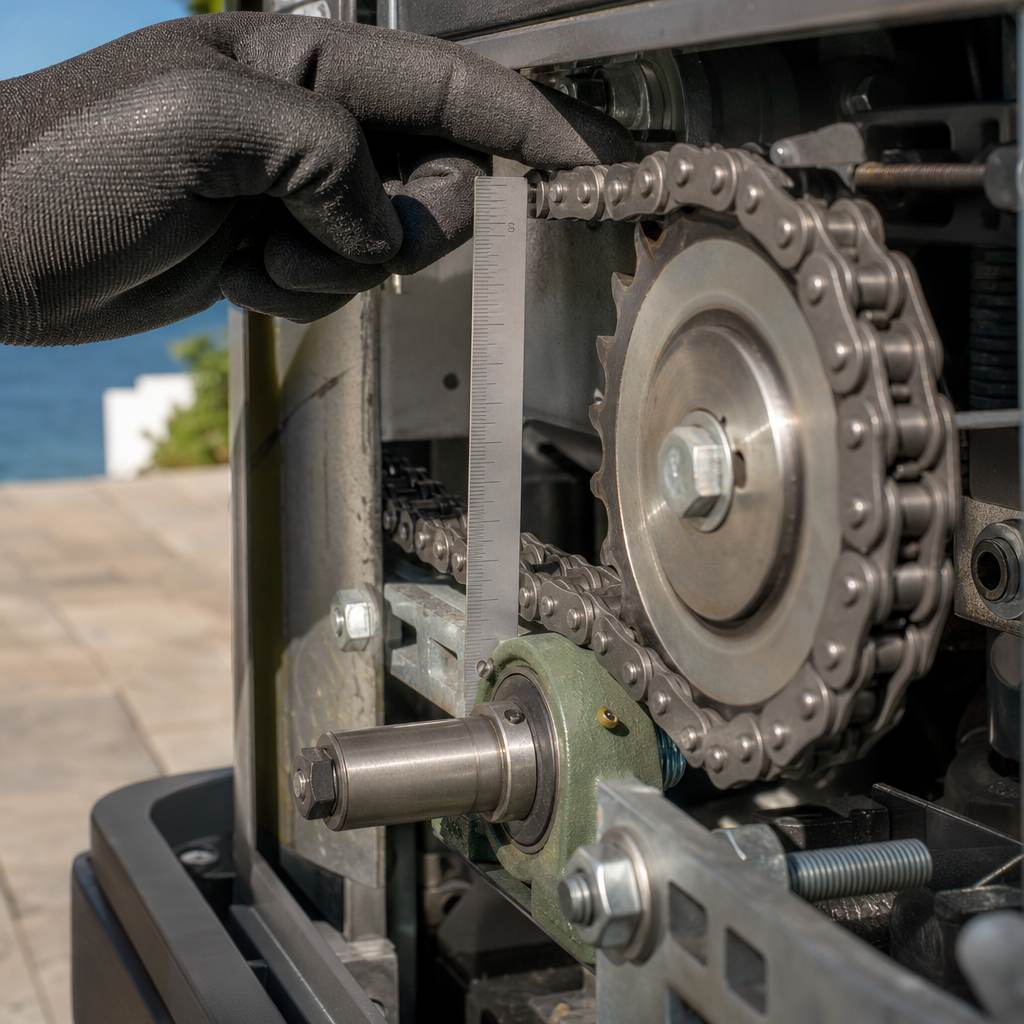
Electric gate operators contain controls, wiring, and power components. In coastal or humid environments, moisture, salt air, and pests can compromise unsealed enclosures.
Enclosure and Weather Seal Inspections
Inspect the operator housing, gaskets, and conduit seals according to the manufacturer’s manual to ensure weather seals remain intact and keep out moisture and debris.
Wiring and Control Inspections
Inspect wiring, controls, and operator attachments in accordance with the manufacturer’s recommendations. Ensure motor mounting hardware, base plates, and structural anchors remain tight and secure. Any dangerous or malfunctioning electrical components should be serviced by a competent professional.
5. Check Drive Chains, Belts, and Travel Limits
Drive chains, actuator arms, and belts experience mechanical loads during regular cycling. Inspect drive components according to the manufacturer’s owner’s manual.
Drive Component Inspection
Inspect drive chains or belts for wear, deterioration, and tension according to manufacturer specifications. Ensure components do not jump sprockets or exhibit damage.
Travel Limits and Mechanical Stops
Inspect internal limit adjustments and physical stops as directed by the operator manual to ensure the gate stops smoothly at intended open and closed positions without striking posts or over-traveling guide assemblies.
6. Treat Rust and Apply Protective Coatings
Need driveway gate maintenance?
We’re available now - call for a fast, free estimate.
Wrought iron, carbon steel, and other metal gates require active surface care to prevent oxidation from compromising structural integrity.
Surface Preparation and Coating Maintenance
- Remove loose rust, flaking coatings, and surface contaminants by scraping, wire-brushing, or sanding to sound metal.
- Prepare the metal surface appropriately based on manufacturer and coating guidelines.
- As recommended by Ironworks Gate Co., maintain a continuous protective coating system across all exposed metal surfaces. Research into protective coatings indicates that systems such as epoxy primers with polyurethane topcoats, or suitable surface-tolerant alkyd systems, provide effective barrier protection against corrosion in aggressive environments (NACE/AMPP corrosion literature).
Structural Integrity and Anchor Inspections
Inspect areas where metal posts meet concrete footings or ground level, where moisture accumulation can cause hidden corrosion. Ensure drainage directs standing water away from structural posts.
7. Test Access Controls and Auxiliary Components
External access equipment must remain weather-resistant and functional across changing environmental conditions.
Keypad and Entry Station Checks
Inspect telephone entry stations, keypads, and radio receivers according to manufacturer instructions. Check that enclosures and weather seals prevent moisture intrusion into wiring cavities.
Auxiliary and Emergency Functionality
- Check In-Ground Induction Loops: Inspect loop sealant in the driveway for cracking or degradation that could allow water intrusion.
- Test Manual Release Mechanisms: Test the emergency manual disconnect or release key per the manual to ensure the gate can be operated manually during power outages or emergencies.
- Verify Battery Backup: Test the battery backup system per manufacturer instructions to verify appropriate operation during power loss.
8. Opener Servicing and System Diagnostics
Gate operators rely on calibrated safety features, control boards, and electrical connections. Detailed diagnostic procedures and repairs must be handled by trained technicians.
General Electrical and Control Maintenance
Inspect wiring, controls, sensors, entrapment-protection devices, and operator attachments according to the owner’s manual. If an operator exhibits electrical faults, abnormal resistance, or control errors, take the gate out of service until repaired by a competent professional.
9. Maintenance Schedules and Professional Repairs
According to Ironworks Gate Co., a consistent maintenance routine prevents premature component failure and protects users from dangerous mechanical malfunctions.
Maintenance Planning
Inspect the gate regularly and follow the operator owner’s manual for all service intervals. The required maintenance frequency depends on gate design, cycle volume, environmental severity, and manufacturer instructions rather than a fixed calendar schedule.
Professional Service Areas
| Service Area | Key Maintenance Tasks |
|---|---|
| Diagnostic & Electrical | Wiring, control, enclosure seal, and battery inspection per manufacturer manual |
| Track & Roller Assembly | Track alignment, roller inspection, and retention stop verification |
| Hinges & Structural Post | Hinge inspection, post plumb check, weld inspection, and structural attachment check |
| Drive Train & Motor | Chain/belt inspection per manual, limit verification, and operator mounting checks |
| Entrapment Safety Devices | Photo-eye alignment, contact edge testing, and entrapment-protection device verification per manual |
Frequently Asked Questions About Driveway Gate Maintenance
How often should a driveway gate be serviced or maintained?
Inspect the gate regularly and follow the operator owner’s manual. Service frequency depends on gate design, daily usage, environmental conditions, and manufacturer instructions.
What is the best lubricant to use on driveway gate hinges and rollers?
Use only the lubricant specified by the gate and hardware manufacturer. Keep lubricants away from sensors, belts, friction clutches, and electrical components.
How do you prevent rust and corrosion on metal driveway gates?
Remove loose rust and contaminants, prepare the metal surface appropriately, and maintain a continuous protective coating system. Coating systems such as epoxy with polyurethane, or suitable surface-tolerant alkyds, serve as examples from corrosion research for barrier protection.
What are the most common warning signs that a gate needs professional repair?
Warning signs include dragging across the ground, unusual screeching or grinding sounds, failure of entrapment-protection sensors, physical structural sagging, or electrical control malfunctions. Dangerous or malfunctioning gates should be removed from service until repaired by a competent professional.
How do you maintain sliding driveway gate tracks and rollers?
Keep tracks clear of dirt, sand, and debris by sweeping and rinsing with fresh water. Inspect bottom rollers and top guide assemblies per manufacturer instructions, and confirm that mechanical end stops and retention brackets remain secure to prevent derailment.
Need driveway gate maintenance?
We’re available now - call for a fast, free estimate.
Sources
- New Safety Standard for Automatic Security Gates Helps … – cpsc.gov (2001)
- FR-2020-07-06.xml – govinfo.gov (2020)
- Final Rule – Safety Standard for Gates and Enclosures – CPSC – cpsc.gov (2020)
Related reading: Electric Gate Not Closing – 10% Off & Free Estimate – Same-Day Service
Related reading: Sliding Gate Maintenance | Call Now-10% Off | Same-Day Service | Free Estimate
Related reading: Automatic Gate Not Opening | 10% Off & Free Estimate | Same-Day Service
Frequently Asked Questions
How does coastal salt fog damage automatic gate electronics and wiring?
Airborne salt and marine moisture penetrate unsealed control boxes, corroding terminal connections and circuit board pathways to cause intermittent electrical shorts. Ironworks Gate Co. utilizes master electrician diagnostic tools and environmental seal checks to protect sensitive opener circuitry from corrosive coastal exposure.
What causes driveway gate posts to sag or corrode at the concrete footing?
Water and salt often pool where metal posts meet concrete footings, causing hidden oxidation that weakens the base steel and causes the gate frame to drag. Ironworks Gate Co. applies specialized blacksmith-level structural inspections and barrier coating systems to resolve deep corrosion before post failure occurs.
When should coastal homeowners schedule a professional driveway gate maintenance check?
While homeowners can clear surface sand weekly, high-salinity coastal environments require professional diagnostics whenever you notice sluggish movement, sensor faults, or grinding noises. You can schedule a free on-site driveway gate assessment and maintenance check with Ironworks Gate Co. to evaluate mechanical alignment and electrical calibration.
About the author
 |
Sarah O’Connor Sarah is a technical writer specializing in home security and access control systems. With over eight years of experience writing for property management and contractor publications, she translates complex mechanical and electrical concepts into clear, actionable advice. She holds a B.A. in Communications from California State University, Fullerton, and frequently consults with certified gate technicians to ensure her content is accurate and practical. |
Gate not opening, off track, or opener dead?
We’re available now - call for a fast, free estimate.
Call Now - Free Estimate