
Quick Summary
Automated entry systems frequently encounter motor binding, sensor alignment failures, and structural wear that compromise property security, highlighting the need for dependable electric gate repair. Ironworks Gate Co. resolves these complex mechanical and electrical malfunctions on the first visit, utilizing over 42 years of blacksmith and automation expertise to restore compliance and coastal-grade durability. Readers will understand critical UL 325 safety standards, recognize warning signs like humming motors or dragging posts, and know when to call a specialist for same-day on-site service.
Electric Gate Repair and Safety Guide
When an automated driveway gate stops working, restoring proper operation is important for property access and security. Automated gates require entrapment protection, obstruction sensing, and secondary sensing such as photo eyes or safety edges. According to historical data from 1990 through 2000 from the U.S. Consumer Product Safety Commission, as reported by the American Society of Home Inspectors, nearly 25,000 gate-related injuries occurred nationwide, including approximately 9,000 children under the age of 15. As specialists at Ironworks Gate Co. emphasize, keeping these systems properly maintained is essential for safety.[2]
Safety Warning: Never bypass safety sensors or work on energized equipment. General troubleshooting steps do not apply to every make and model; always follow the specific manufacturer’s manual and hire a qualified technician for electrical, structural, hydraulic, or welding work.
Initial Assessment: Managing Gate Issues Safely
When an electric gate malfunctions, taking the appropriate initial steps prevents component damage and reduces safety risks.
Safety and Entrapment Prevention
Modern automated gates depend on functional safety sensors to halt or reverse movement when an obstacle is present. If a gate fails to operate properly:[4]
- Disengage the drive according to manufacturer guidelines: Use the manufacturer-specified manual release mechanism rather than forcing mechanical components by hand.
- Check the optical path: Ensure safety photo eyes are clean and free of dirt, cobwebs, or debris, using a soft, dry cloth.
- Inspect external enclosures: Visually check operator cabinets from the outside for signs of moisture or damage before attempting basic resets.
Basic Checks Before Calling for Service
Check whether the circuit breaker supplying the operator has tripped. Verify that handheld remotes or access keypads have functional batteries. If the operator hums but the gate does not move, disconnect power at the main supply and contact a qualified technician to diagnose the issue.
Diagnosing Common Gate Problems
As noted by Ironworks Gate Co., automated gate systems combine electrical controls, mechanical assemblies, and structural hardware. A fault in any component can prevent normal operation.
Common Causes of Operation Failure
When an automated gate fails to open or close, possible causes include:
- Triggered Safety Circuits: If the gate opens but will not close, an obstructed, misaligned, or faulty safety sensor may be preventing operation.
- Mechanical Resistance: Seized hinges, worn rollers, or a damaged track create resistance that can cause the operator to stop.
- Power Supply Issues: Inadequate voltage or tripped electrical circuits can prevent the motor from operating.
Signs of Mechanical or Electrical Issues
Signs that an operator or gate assembly requires professional service include:
- Motor humming without movement: Indicates electrical power is reaching the unit, but mechanical binding or an internal electrical failure prevents rotation.
- Sluggish movement: Can indicate hinge friction, roller binding, or mechanical wear.
- Intermittent stopping or reversing: Often points to sensor alignment issues, wiring faults, or internal component wear.
- Hydraulic fluid leaks: Hydraulic operators showing fluid along shafts or housings require qualified repair.
Swing Gate Maintenance and Repair
Swing gates place substantial load on hinge posts and mounting assemblies. Over time, physical settling or worn hardware can cause gate panels to bind or drag.
Post Alignment and Hinge Maintenance
When posts lean or shift, the gate panel can drag against the ground, placing heavy stress on the mechanical operator. Correcting this requires adjusting or releveling the post, repairing or replacing worn hinges, and ensuring the gate leaf swings freely before the operator is re-engaged. Structural and welding adjustments must be completed by a qualified technician.
Actuator Servicing
According to Ironworks Gate Co., linear actuators and articulating arm operators require periodic inspection. Damaged seals, worn drive screws, or internal hydraulic leaks should be serviced by a qualified professional in accordance with the manufacturer’s documentation.
Sliding Gate Maintenance and Repair
Sliding gates require a level and unobstructed path of travel. ASTM reported 47 work-related fence-gate accidents involving derailment and falling between 1990 and 2024, with 35 injuries and 12 deaths. Maintaining proper guide rollers, tracks, and physical positive stops is a critical safety priority.[1]
Track and Roller Maintenance
Ground-mounted sliding gates require clean, structurally sound tracks. Damaged track sections, worn guide rollers, or faulty wheel bearings should be repaired or replaced by a qualified technician to keep the panel aligned and secure on its mounts.
Cantilever Gate Systems
Cantilever gates operate via internal roller assemblies that support the gate above the driveway. If internal rollers wear out, the gate panel may drop and misalign. Routine inspection by a trained professional ensures roller carriages and guide assemblies remain properly adjusted.
Safety Standards, Sensors, and Maintenance Requirements
Need electric gate repair?
We’re available now - call for a fast, free estimate.
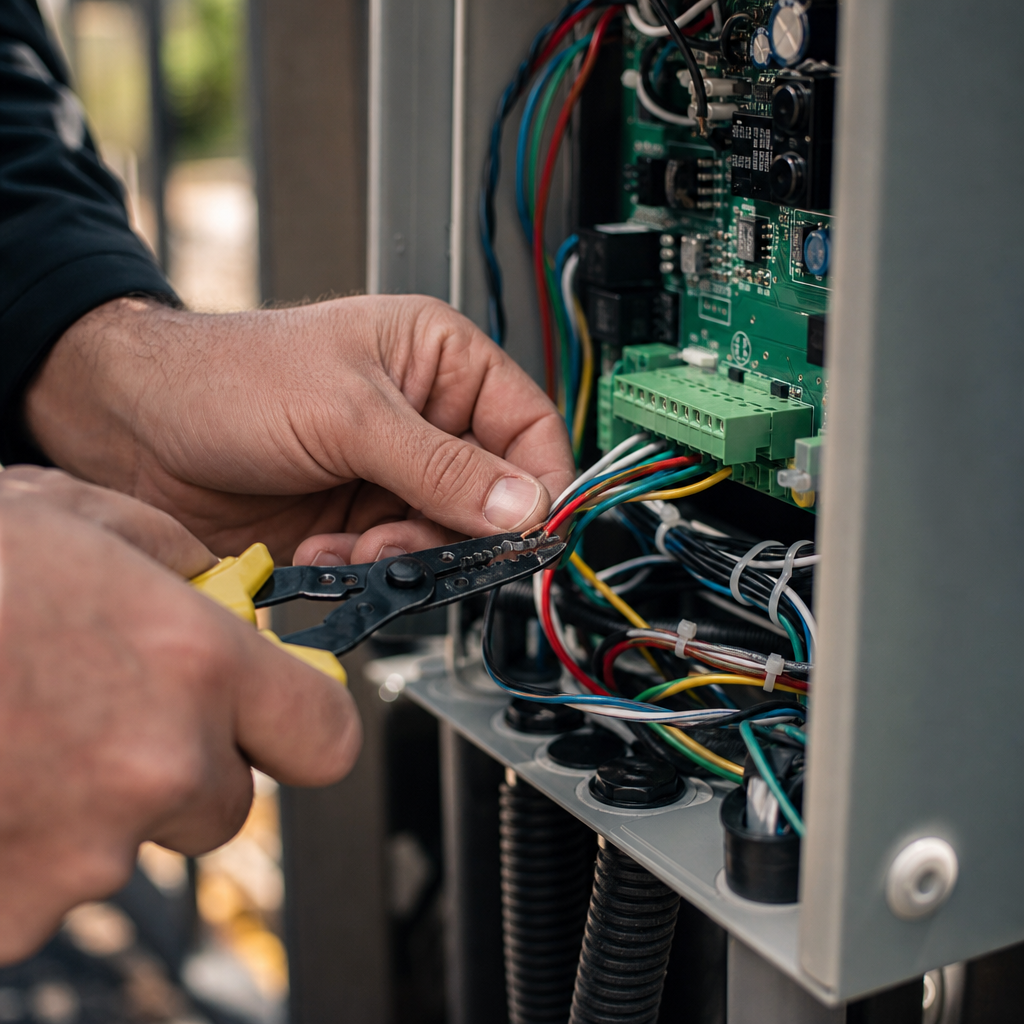
In an independent survey of more than 100 automated commercial gates conducted by safety organization Gate Safe, over 90% were classified as unsafe, with deficiencies including missing run-back protection, absent safety edges, inadequate hinge protection, and missing bottom-rail safety edges.[3]
Sensor Replacement and Standards Compliance
UL 325 includes entrapment-protection and other safety requirements for automated gate systems. Damaged, cracked, or non-functional safety sensors must be replaced with devices that meet the specific manufacturer’s UL 325 compliance requirements. Never attempt to bypass or remove safety sensors.
Recommended Maintenance Schedule
Gate Safe recommends professional safety and mechanical maintenance checks at least every six months. Regular servicing helps verify that entrapment protection devices, mechanical stops, emergency releases, and structural hardware are functioning properly.
Structural Gate Materials
The technicians at Ironworks Gate Co. point out that the structural condition of a gate panel directly affects operator performance. Gate leaves must remain structurally sound and properly hung to prevent excess strain on automation hardware.
Wood and Metal Gate Care
Wood gates can warp over time due to weather exposure, altering panel balance and limit adjustments. Metal gates constructed of iron or steel should be regularly inspected for rust, cracked weld joints, and mounting bracket fatigue. Any structural welding or heavy reinforcement must be performed by a qualified technician.
Manual Release Procedures
When electrical power is lost or the operator fails, automated gates can be disengaged to permit manual operation:
- Disconnect power: Turn off the circuit breaker or disconnect switch to prevent unexpected movement if power returns.
- Locate the manual release: Refer to the manufacturer’s manual to locate the specific release key, lever, or pin.
- Disengage the mechanism: Follow the manufacturer’s exact procedure to unlock the drive mechanism.
- Secure the gate: Fasten the gate panel securely in place to prevent wind or gravity from causing accidental movement.
Repair and Replacement Considerations
According to Ironworks Gate Co., deciding whether to repair or replace an electric gate operator depends on several factors, including system age, structural integrity, and compliance with modern safety requirements. Replacement is generally recommended when:
- The operator lacks necessary entrapment-protection features required by modern safety standards.
- The structural housing or chassis is severely corroded, preventing secure motor mounting.
- Replacement parts for internal drive components are no longer available from the manufacturer.
- The existing operator is improperly rated for the size or weight of the gate panel.
Frequently Asked Questions
Why is my gate motor humming but the gate will not move?
A humming motor indicates that power is reaching the unit, but mechanical resistance, a failed motor start capacitor, or internal drive damage is preventing movement. Disconnect power and consult a qualified technician.
Why does my electric gate open or close unexpectedly?
Unexpected movement or false triggering is often caused by moisture intrusion in external keypads, damaged access wiring, or faulty sensor inputs. An inspection by a professional technician can identify the source of the electrical fault.
How often should an automated gate be serviced?
Gate Safe recommends professional safety and mechanical maintenance checks at least every six months to verify entrapment protection, sensor operation, and hardware integrity.
Need electric gate repair?
We’re available now - call for a fast, free estimate.
Sources
- [PDF] 2024-11-20-COPF-CODD-Hummingbird-Alliance-Meeting-Log.pdf – cpsc.gov (2024)
- New Safety Standard for Automatic Security Gates Helps Prevent … – cpsc.gov (2000)
- Help and Advice for Industry Professionals involved … – gate-safe.org (2008)
- Help and Advice for Automated Gate Users and Owners – gate-safe.org
Related reading: Sliding Vs Swing Gate – Call Now-10% Off – Same-Day Service – Free Estimate
Related reading: Automatic Gate Repair – Call Now-10% Off – On-Site in 60 Minutes – Free Estimate
Related reading: Electric Gate Opener Troubleshooting | Call Now-10% Off | Same-Day Service | Free Estimate
Frequently Asked Questions
How does coastal salt air affect electric gate operators, and how can damage be prevented?
Marine air accelerates corrosion on metal frames, hinge welds, and sensitive internal circuitry, leading to mechanical binding and electrical shorts. Ironworks Gate Co. provides coastal-grade electric gate repair using weatherproof operator enclosures, marine-rated lubricants, and protective coatings to ensure long-term reliability near the ocean.
Can an older automated gate system be retrofitted to comply with modern UL 325 safety standards?
Yes, many older gates can be brought up to code by adding monitored photo eyes, safety edges, and updated control boards. Ironworks Gate Co. assesses existing mechanical and electrical components to integrate compliant entrapment protection or advise if a full operator replacement is necessary.
What should property owners expect during a same-day electric gate repair service call?
A qualified technician performs a comprehensive diagnosis of the motor, safety sensors, track alignment, and structural hinges on the spot. Backed by over 42 years of blacksmith and automation expertise, Ironworks Gate Co. arrives with fully stocked service vehicles to resolve mechanical and electrical faults on the first visit.
About the author
 |
Sarah O’Connor Sarah is a technical writer specializing in home security and access control systems. With over eight years of experience writing for property management and contractor publications, she translates complex mechanical and electrical concepts into clear, actionable advice. She holds a B.A. in Communications from California State University, Fullerton, and frequently consults with certified gate technicians to ensure her content is accurate and practical. |
Gate not opening, off track, or opener dead?
We’re available now - call for a fast, free estimate.
Call Now - Free Estimate